

Every time your Romex technician arrives at your property, they already know things about your home that you might not realize. One of our senior technicians in the Dallas market puts it this way: "The service notes are my playbook. Without them, I'm starting from scratch every visit. With them, I'm building on what we learned last time." where activity was spotted last visit, what exclusion work was completed, which areas were flagged for follow-up, and what conditions you reported between appointments. That history lives in your service file—and it shapes every decision your technician makes during the visit.
But service notes only tell half the story. The other half comes from you. Here's how the communication loop works and why it matters.
What Your Technician Knows Before They Arrive
Before pulling into your driveway, your technician reviews your property's service history:
- Previous activity notes. Where were ants trailing last time? Was there evidence of rodent activity in the garage? Did the last inspection flag moisture under the master bath?
- Exclusion history. What's been sealed, screened, or repaired—and what's pending.
- Product application records. What was applied, where, and how long ago. This prevents redundant treatment and ensures proper rotation.
- Your reported concerns. If you called between visits about a new ant trail in the kitchen, that's in the notes. Your technician will start there.
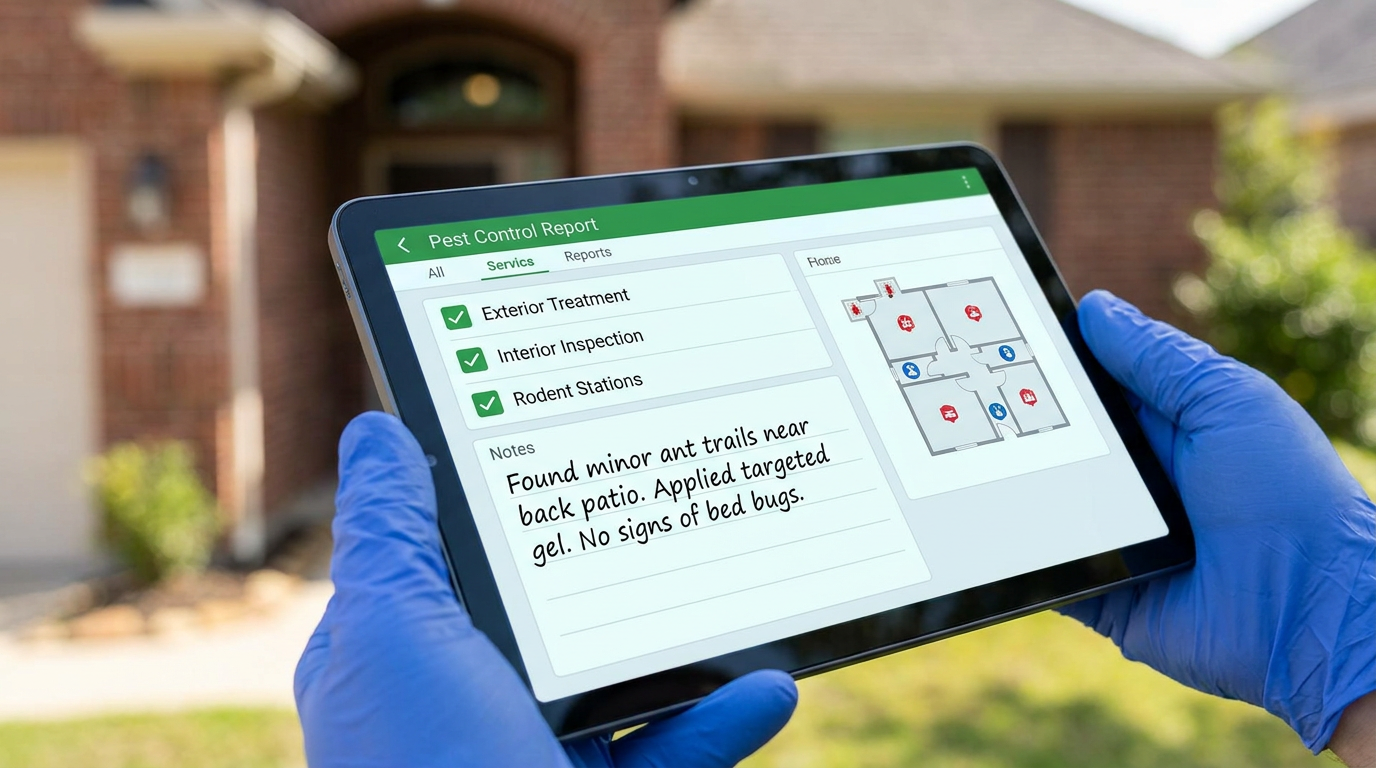
This continuity is one of the biggest advantages of recurring service over one-time treatments. Every visit builds on the last one.
What We Need You to Tell Us
Your technician's training and tools can detect a lot—but they can't observe what happens when they're not there. The information you provide fills critical gaps:
Between Visits
- New pest sightings (what, where, when, how many)
- Plumbing leaks or water damage you've discovered
- Home renovations that may have opened new entry points
- Neighbor activity (construction next door, abandoned property, new landscaping)
- Pet behavior changes (excessive scratching could indicate fleas)
During the Visit
- Which rooms have been most active since the last visit
- Whether recommended changes (food storage, moisture fixes) have been implemented
- Areas you'd like re-inspected or treated
- Questions about anything you've seen or read about pest activity in your area
Why This Two-Way Flow Matters
Consider this scenario: you notice tiny ants in the bathroom but don't mention it because the technician is treating the kitchen area. Without that information, the bathroom colony continues growing for another two to three months. With it, your technician can adjust product placement, check for a moisture source (a common driver of bathroom ant activity), and prevent a minor nuisance from becoming a full callback.
Every piece of information you share makes the service more targeted and effective. There's no such thing as a detail too small to mention—what seems like a one-off sighting to you might be the early sign of a pattern your technician can catch.
How to Communicate Between Visits
Don't wait for the next appointment if something changes. Romex includes free re-service between scheduled visits if pest activity breaks through. Contact us through:
- Phone: Call the office and describe what you're seeing. Include location, timing, and approximate numbers.
- Online: Submit a request through our website with details about the activity.
Your technician gets the notes before arriving, ensuring the re-service targets the right area with the right approach.
The Bottom Line
Pest control is an information business as much as a chemistry business. The more your technician knows about what's happening at your home between visits, the more precisely they can treat it. And the more you understand about what your technician found during the visit, the better you can maintain conditions between appointments.
That two-way loop—not just the product on the ground—is what makes recurring service work.