
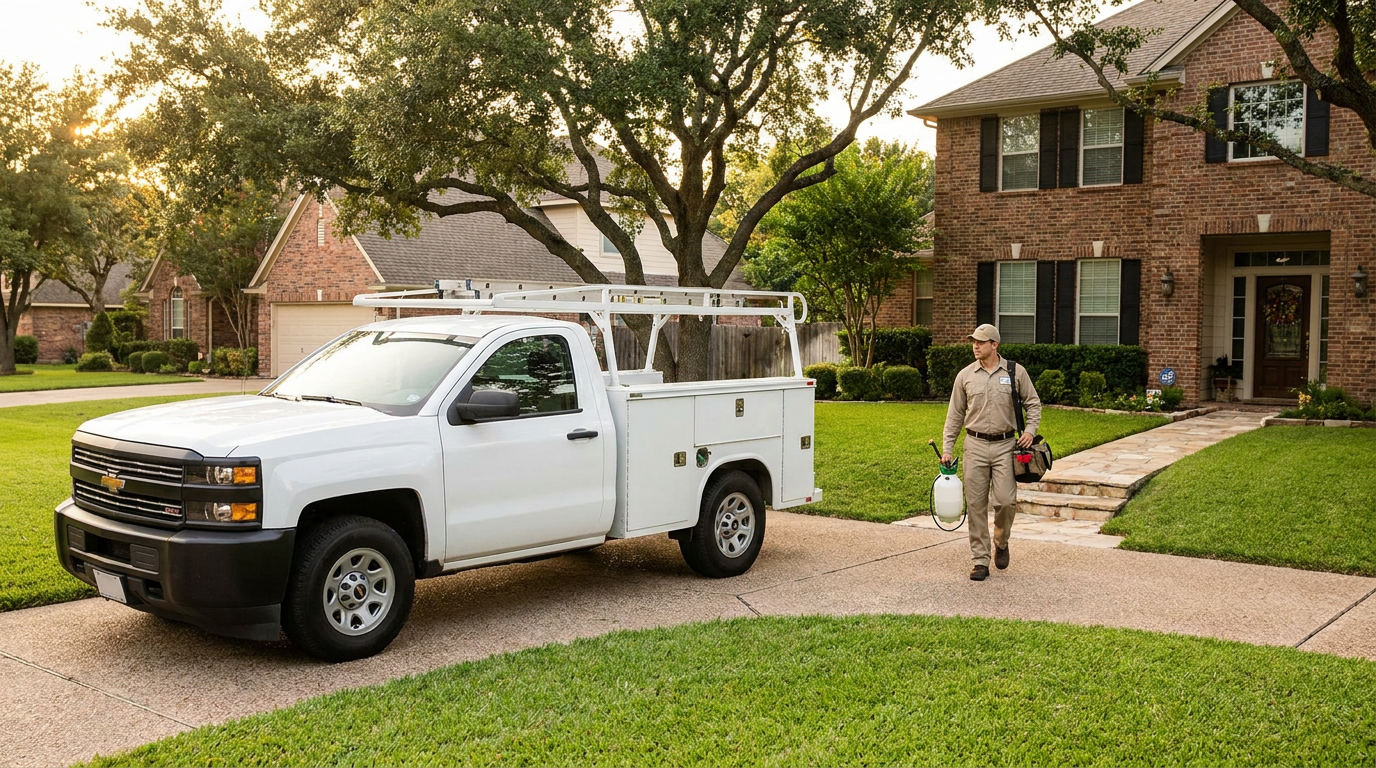
If there's one thing Romex technicians repeat more than anything else, it's this: keep your service cadence consistent. Not because we want to sell more visits, but because the chemistry and biology behind pest control have hard limits—and those limits land squarely in the 60-to-90-day window.
Here's the science behind the schedule, explained in plain language.
How Residual Products Actually Work
The products Romex applies around your home's perimeter and entry points are residual insecticides. That means they stay active on surfaces for weeks after application. Pests that cross the treated zone pick up the product on their legs and bodies, carrying it back to the colony or nest. It's a slow, sustained kill—not an instant knockdown.
But "residual" doesn't mean permanent. UV exposure, rain, heat, irrigation, and normal surface wear all break down the active ingredients over time. In a controlled laboratory, most professional-grade residuals maintain lethal concentrations for 60 to 90 days. In the real world—especially in Texas, Oklahoma, Louisiana, and Mississippi where heat and humidity accelerate breakdown—the effective window trends toward the shorter end of that range.
What Happens Past 90 Days
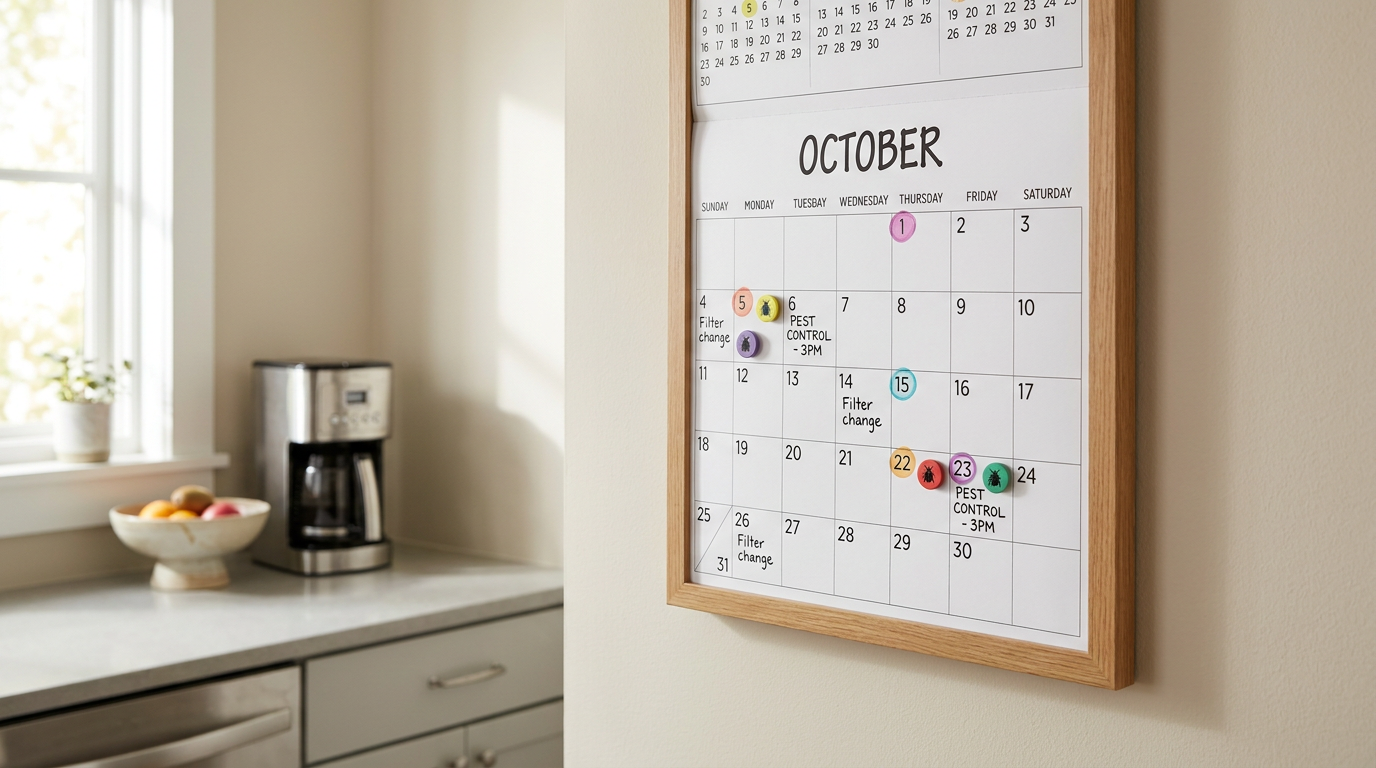
Around the 90-day mark, product concentrations on treated surfaces drop below the lethal threshold. Pests that cross the barrier now receive a sub-lethal dose—enough to slow them down, maybe, but not enough to eliminate them or prevent colony recovery. By day 120, you're essentially unprotected.
This is why homeowners who stretch their visits to "every four or five months" often report breakthrough pest activity that didn't happen when they were on a tighter schedule. The barrier didn't fail—it expired.
Every-Other-Month vs. Quarterly: Which Is Right?
Romex recommends a cadence of every other month to quarterly for most properties. Where you land on that spectrum depends on several factors:
| Factor | Every-Other-Month (60 days) | Quarterly (90 days) |
|---|---|---|
| Property near water, woods, or construction | ✅ Recommended | May not hold |
| High pest pressure history | ✅ Recommended | May not hold |
| Active infestation (first year) | ✅ or monthly | Too long between visits |
| Low-pressure suburban lot, good exclusion | Works well | ✅ Usually sufficient |
| Peak season (spring/summer in TX, OK, LA, MS) | ✅ Recommended | Borderline |
Your Romex technician will recommend a cadence based on your property's specific pressure profile. Many homeowners start on every-other-month service and shift to quarterly after the first year once pest populations are controlled and exclusion work is complete.
Your Role in Making the Cadence Work
The 60-to-90-day window assumes the homeowner is maintaining their part of the partnership: sealed food, no standing water, vegetation trimmed back, and entry points maintained. If indoor conditions are attracting pests faster than the barrier can handle, even a 60-day cadence will feel like it's not enough.
Check our 10-point homeowner checklist for what to do between visits. Those habits don't just help—they're what makes the cadence work.
The Takeaway
Consistent service cadence is the single most powerful tool in residential pest control. The chemistry works when you respect the timeline. Stretch it, and you're rolling the dice against biology in a climate that favors the pests.
Request a quote and let's set up a cadence that fits your property—no surprise add-ons, just flat, written pricing before any work begins.