
When the Romex truck pulls into your driveway, some homeowners head inside and wait for a knock when it's over. Others hover by the garage wondering what's happening. A longtime customer in Norman, Oklahoma, once told us, "I had no idea how much was happening during each visit until I actually walked the property with my technician." In either case, most people don't have a clear picture of what actually takes place during a recurring service visit—and understanding the process helps you see why your participation in it matters.
Here's a step-by-step walkthrough of a typical Romex recurring service appointment, from arrival to departure.
Step 1: The Exterior Inspection (5–10 Minutes)
Your technician starts by walking the full perimeter of your home before touching any equipment. They're looking for changes since the last visit: new cracks in the foundation, vegetation that's grown back against the house, gaps around recently installed utilities, evidence of burrowing along the slab, and signs of pest activity like webs, droppings, or mud tubes.
This is where your feedback helps. If you've noticed ants trailing along the east side of the house, or saw a mouse near the garage, mention it before the walkthrough. That intel changes what your technician prioritizes.
Step 2: Interior Check (5 Minutes)
Depending on the service plan and what the exterior inspection reveals, your technician may do a quick interior check—especially in kitchens, bathrooms, utility rooms, and garages. They're verifying that indoor conditions aren't creating pest pressure that undermines the exterior barrier. This is the "kitchen conversation" we covered in our previous post.
Step 3: Targeted Product Application (10–15 Minutes)
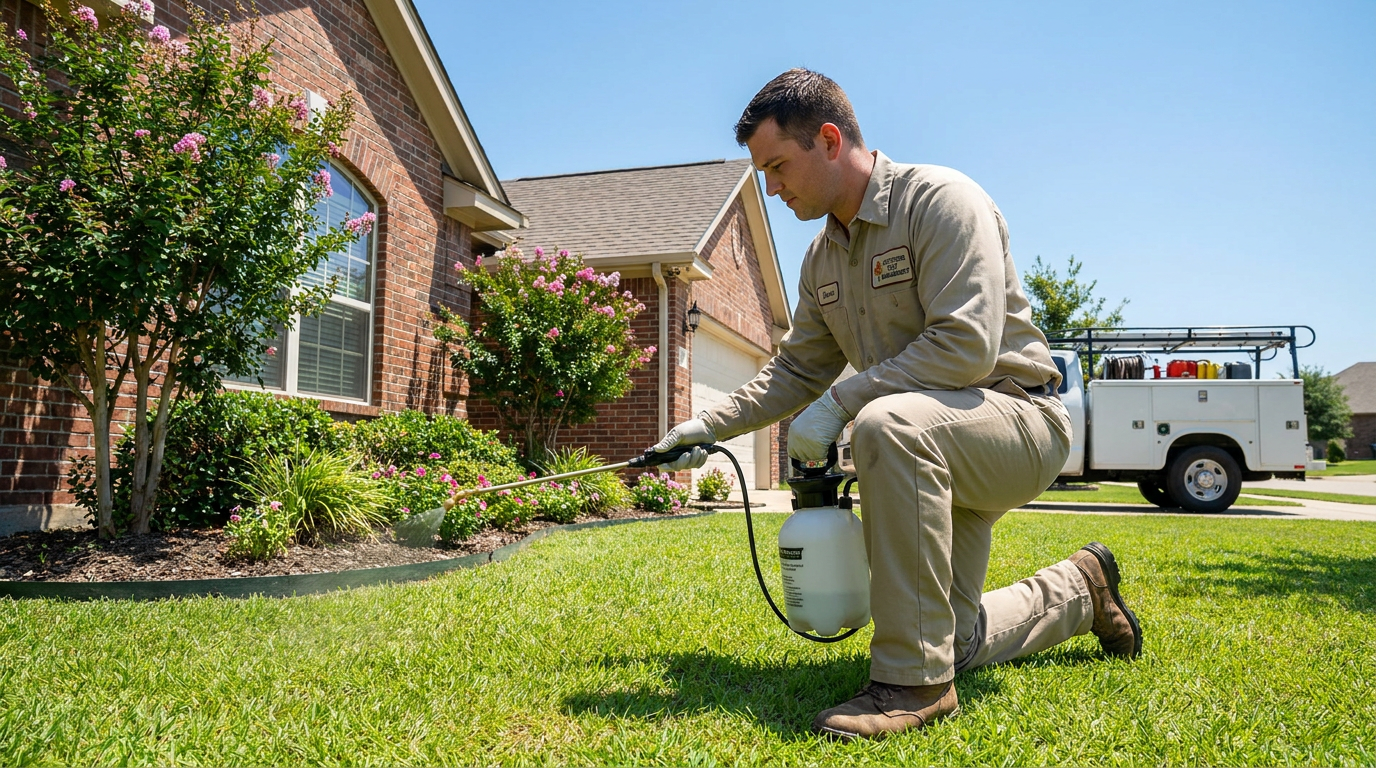
Now the application begins—but it's not a blanket spray. Your Romex technician applies commercial-grade residual product along the foundation perimeter, around entry points (doors, windows, pipe penetrations), under eaves, and in any specific areas flagged during inspection. If ant or roach activity was noted indoors, targeted interior treatment goes to those hot spots only.
The product selection and placement is based on what's active in your area at this time of year. A spring visit in Dallas targets fire ants and carpenter ants. A summer visit in Baton Rouge focuses on cockroaches and mosquito harborage. The treatment adapts—it's not the same every time.
Step 4: Exclusion and Maintenance Checks (5 Minutes)
Your technician verifies that previous exclusion work is holding—garage door seals, weep hole screens, pipe penetration seals. If something has come loose or a new gap has appeared, they note it for repair or schedule it for the next visit. They'll also flag anything on the homeowner's side: a door sweep that's worn through, a tree branch now touching the roof, or mulch that's been pushed back against the foundation.
Step 5: The Homeowner Debrief (3–5 Minutes)
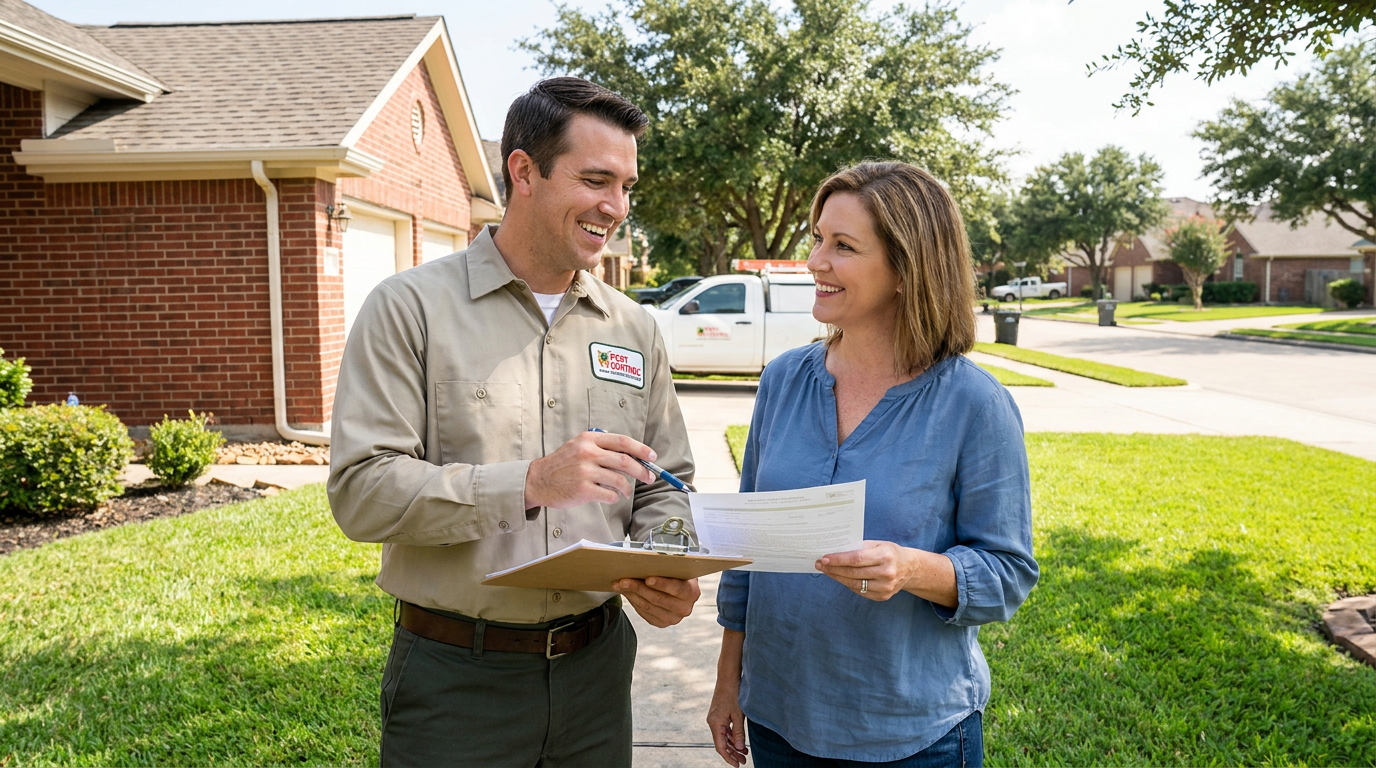
This is the part that separates professional pest control from "just spraying." Before leaving, your technician reviews what they found, what they treated, and what they'd like you to watch for before the next visit. This two-way conversation—your observations plus their expertise—is what makes recurring service effective rather than repetitive.
They'll also confirm your next scheduled visit and make sure the timing works with your schedule.
Why the Process Matters
A service visit that skips the inspection, ignores exclusion, and jumps straight to spraying is leaving value on the table. The product application is important, but it's one layer in a multi-layer system. Inspection catches new problems. Exclusion blocks entry points. The debrief keeps both sides informed. And your habits between visits keep the whole system working.
That's what "beyond the spray" means—and it's why Romex structures every visit this way.
Ready to start? Request a quote for your home.