
Drain Fly
Psychodidae family
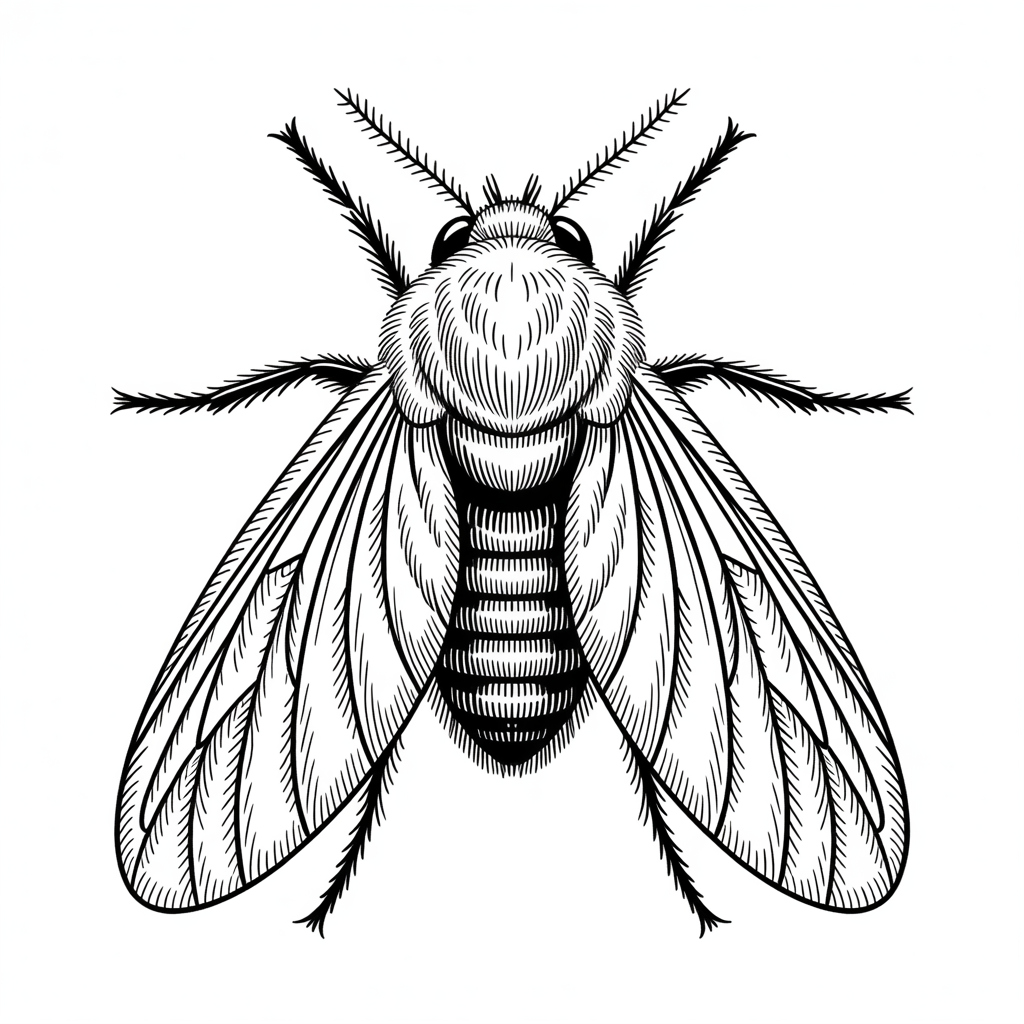
Scientific illustration for identification purposes
Overview
Drain flies, also called moth flies or sewer gnats, are small fuzzy flies that breed in the organic matter that accumulates in drains. While they do not bite or transmit disease, they indicate plumbing or sanitation issues.
How to Identify
- Very small - about 1/8 inch
- Fuzzy, moth-like appearance
- Large, leaf-shaped wings held roof-like over body
- Grayish or tan color
- Weak, short flights, often hopping
Behavior
Drain flies are weak fliers that rest on walls near their breeding sites during the day. They are most active at night and are attracted to lights. They do not bite or spread disease but can trigger allergies in some people.
Habitat
Breed in the organic slime that builds up in drains, sewage treatment facilities, and any areas with standing water and organic matter. Common in bathrooms, kitchens, and basements.
Diet
Larvae feed on bacteria, fungi, and organic matter in drain slime. Adults feed on flower nectar and polluted water.
Reproduction
Females lay 30-100 eggs in irregular masses on drain surfaces. Complete development from egg to adult takes 8-24 days. Multiple generations per year.
Distribution in the Southern U.S.
Common throughout Texas, Oklahoma, Louisiana, and Mississippi, especially in humid environments.
Regional Notes
The humid Southern climate provides ideal conditions for drain fly breeding. Air conditioning condensate lines are common breeding sites.
Signs of Infestation
- Small fuzzy flies resting on bathroom walls
- Flies emerging from drains
- Dead flies accumulating near drains
- Flies attracted to night lights
- Increase in flies after returning from vacation
Prevention Tips
- Clean drains regularly with enzyme cleaners
- Flush rarely-used drains weekly
- Fix plumbing leaks promptly
- Clean AC condensate lines and drip pans
- Remove standing water sources
- Use drain brushes to remove organic buildup
When to Contact a Professional
Contact a professional if drain cleaning does not resolve the problem, or if flies appear to be coming from floor drains, walls, or unknown sources.
Romex Pest Control provides professional drain fly control services across Texas, Oklahoma, Louisiana, and Mississippi.
Learn about our drain fly control servicesFrequently Asked Questions
Are drain flies harmful?
Drain flies do not bite or transmit disease to humans. However, they can trigger allergies in some people and are an indicator of sanitation issues in drains.
Why do drain flies keep coming back?
Drain flies return because the organic film they breed in is still present. Physical cleaning of drains with brushes and enzyme cleaners, not just water or bleach, is needed to eliminate breeding sites.
Latest Research & News
Recent developments about drain fly
Get the latest news and research about drain fly
Click "Load News" to fetch recent articles from scientific sources