
German Cockroach
Blattella germanica
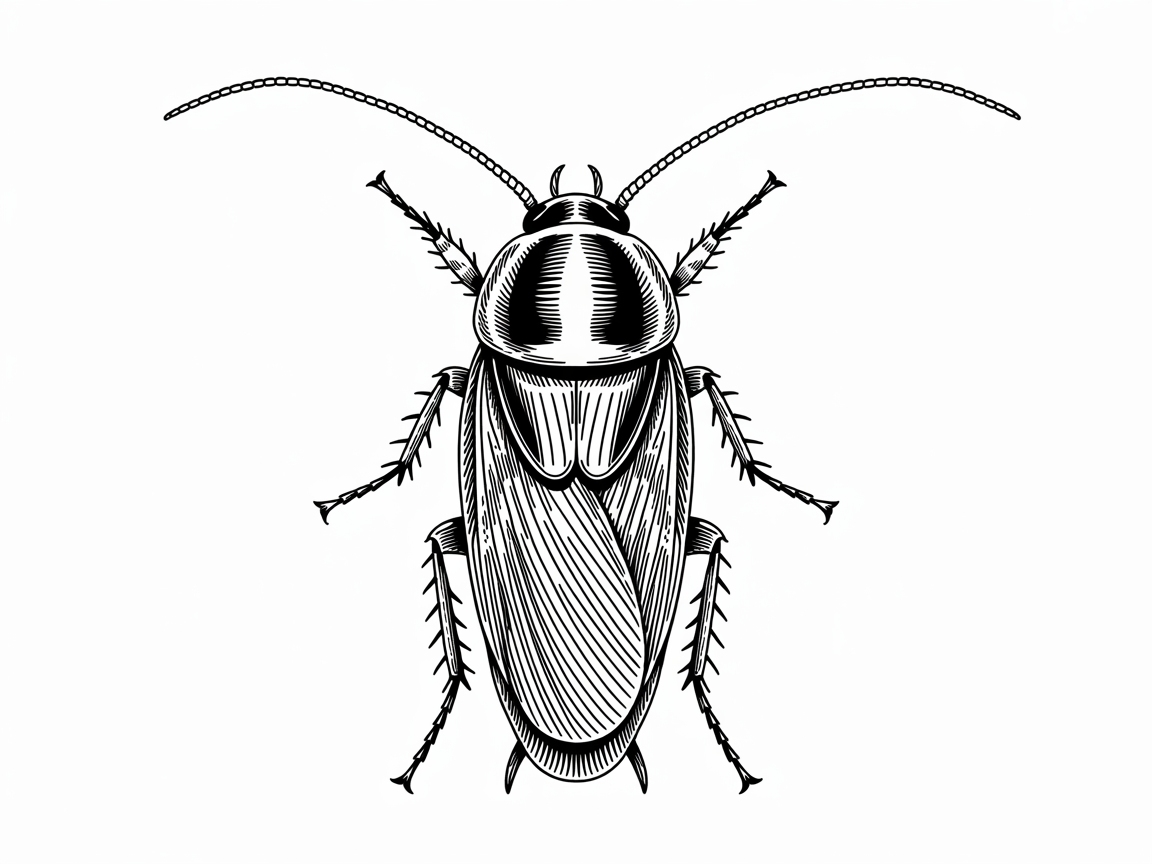
Scientific illustration for identification purposes
Overview
The German cockroach is the most common and economically significant indoor cockroach species worldwide. Despite its name, it likely originated in Southeast Asia. This species is particularly challenging to control due to its rapid reproduction rate and ability to develop resistance to insecticides.
How to Identify
- Two dark longitudinal stripes on the pronotum (shield behind head)
- Light brown to tan coloration
- Fully developed wings that cover the abdomen (rarely flies)
- Long, slender antennae
- Nymphs are smaller, darker, and wingless with a light stripe down the back
Behavior
German cockroaches are nocturnal and thigmotactic (prefer tight spaces). They spend 75% of their time in harborages and are most active at night. Finding cockroaches during the day often indicates a severe infestation. They communicate using aggregation pheromones that attract other roaches to favorable hiding spots.
Habitat
Strongly associated with human structures, especially kitchens and bathrooms. They prefer warm (70-75°F), humid environments near food and water sources. Common harborages include behind refrigerators, under sinks, inside appliances, in wall voids, and around plumbing fixtures.
Diet
Omnivorous scavengers that will eat almost anything organic including crumbs, grease, soap, toothpaste, book bindings, and even other cockroaches. They can survive for weeks without food if water is available.
Reproduction
Females carry egg cases (oothecae) containing 30-40 eggs until just before hatching. A single female can produce 4-8 egg cases in her lifetime, potentially resulting in hundreds of offspring. From egg to adult takes 50-60 days under optimal conditions.
Distribution in the Southern U.S.
Found throughout all Southern states, particularly prevalent in urban and suburban areas. The warm, humid climate extends their outdoor survival, though they remain primarily indoor pests.
Regional Notes
In the Southern United States, German cockroaches are often found in conjunction with American cockroaches. Multi-family housing, restaurants, and commercial kitchens are particularly vulnerable. Infestations spread easily through shared walls and plumbing in apartments.
Signs of Infestation
- Live roaches seen, especially at night
- Small, dark droppings resembling pepper or coffee grounds
- Egg cases (oothecae) in hidden areas
- Musty, oily odor in severe infestations
- Shed skins (exuviae) near harborage areas
Prevention Tips
- Eliminate food sources by cleaning up crumbs and spills immediately
- Store food in sealed containers
- Fix leaky pipes and eliminate standing water
- Seal cracks and crevices around pipes, cabinets, and walls
- Remove clutter that provides hiding spots
- Inspect groceries, boxes, and secondhand appliances before bringing inside
- Take out trash regularly and use sealed garbage containers
When to Contact a Professional
Professional treatment is recommended for any German cockroach infestation, as they reproduce rapidly and develop insecticide resistance. Contact a professional immediately if you see roaches during the day, find multiple egg cases, or if DIY treatments fail to reduce the population within 2 weeks.
Romex Pest Control provides professional german cockroach control services across Texas, Oklahoma, Louisiana, and Mississippi.
Learn about our german cockroach control servicesFrequently Asked Questions
Can German cockroaches make you sick?
Yes. German cockroaches are known to carry over 30 types of bacteria including E. coli and Salmonella. Their droppings, shed skins, and body parts are major triggers for asthma and allergies, especially in children. Studies show that cockroach allergens are present in most urban homes.
Why are German cockroaches so hard to eliminate?
German cockroaches reproduce extremely fast (one female can lead to 30,000+ roaches in a year), hide in tiny cracks, develop resistance to common pesticides, and carry their egg cases with them, protecting developing eggs from treatments. Effective control requires integrated pest management with multiple methods.
Do German cockroaches fly?
While German cockroaches have fully developed wings, they rarely fly. Instead, they may glide short distances when disturbed. They prefer to run and can move up to 3 miles per hour, making them one of the fastest running insects relative to body size.
Latest Research & News
Recent developments about german cockroach
Get the latest news and research about german cockroach
Click "Load News" to fetch recent articles from scientific sources