
Norway Rat
Rattus norvegicus
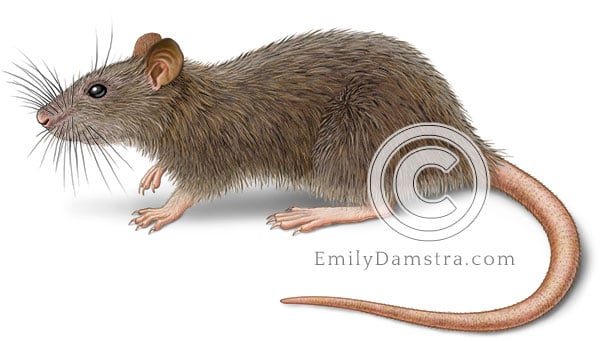
Scientific illustration for identification purposes
Overview
Norway rats, also called brown rats or sewer rats, are large rodents that live in close association with humans. They are destructive pests that contaminate food, damage structures, and transmit diseases. They are neophobic (cautious of new things), making control challenging.
How to Identify
- Large size - body 7-10 inches long
- Brown to grayish-brown color
- Blunt nose and small ears
- Tail shorter than body
- Droppings are capsule-shaped, 3/4 inch
Behavior
Norway rats are excellent swimmers and often enter buildings through sewers. They are nocturnal and cautious of new objects in their environment. They live in colonies with dominant hierarchies.
Habitat
Burrow in soil near foundations, live in basements, sewers, and ground-level areas. Prefer lower floors unlike roof rats. Found near garbage, food storage, and water sources.
Diet
Omnivorous but prefer proteins and carbohydrates. Eat garbage, pet food, birdseed, and human food. Require water daily.
Reproduction
Females can have 6-12 litters per year with 8-12 pups each. Pups mature in 2-3 months. A single pair can produce thousands of descendants in a year.
Distribution in the Southern U.S.
Common throughout Texas, Oklahoma, Louisiana, and Mississippi, especially in urban areas.
Regional Notes
Norway rats are particularly problematic in older Southern cities with aging sewer infrastructure. They readily enter buildings through plumbing.
Signs of Infestation
- Gnaw marks on food packaging or wood
- Droppings (3/4 inch capsule-shaped)
- Greasy rub marks along walls
- Burrows near foundations
- Sounds of scurrying at night
- Sightings, especially at dusk
Prevention Tips
- Seal gaps larger than 1/2 inch
- Store food in sealed containers
- Remove outdoor food sources (birdseed, pet food)
- Keep garbage in sealed containers
- Eliminate water sources
- Trim vegetation away from building
When to Contact a Professional
Contact a professional for any rat infestation. Rats are difficult to control and can transmit serious diseases. Professional rodent control programs are the most effective approach.
Romex Pest Control provides professional norway rat control services across Texas, Oklahoma, Louisiana, and Mississippi.
Learn about our norway rat control servicesFrequently Asked Questions
What is the difference between Norway rats and roof rats?
Norway rats are larger with blunt noses, small ears, and tails shorter than their body. They prefer ground level and basements. Roof rats are smaller with pointed noses, large ears, and tails longer than their body. They prefer upper levels and attics.
What diseases do rats carry?
Rats can transmit numerous diseases including leptospirosis, salmonellosis, rat-bite fever, and plague. They contaminate food with urine and feces and can carry fleas and other parasites.
Latest Research & News
Recent developments about norway rat
Get the latest news and research about norway rat
Click "Load News" to fetch recent articles from scientific sources