
Striped Bark Scorpion
Centruroides vittatus
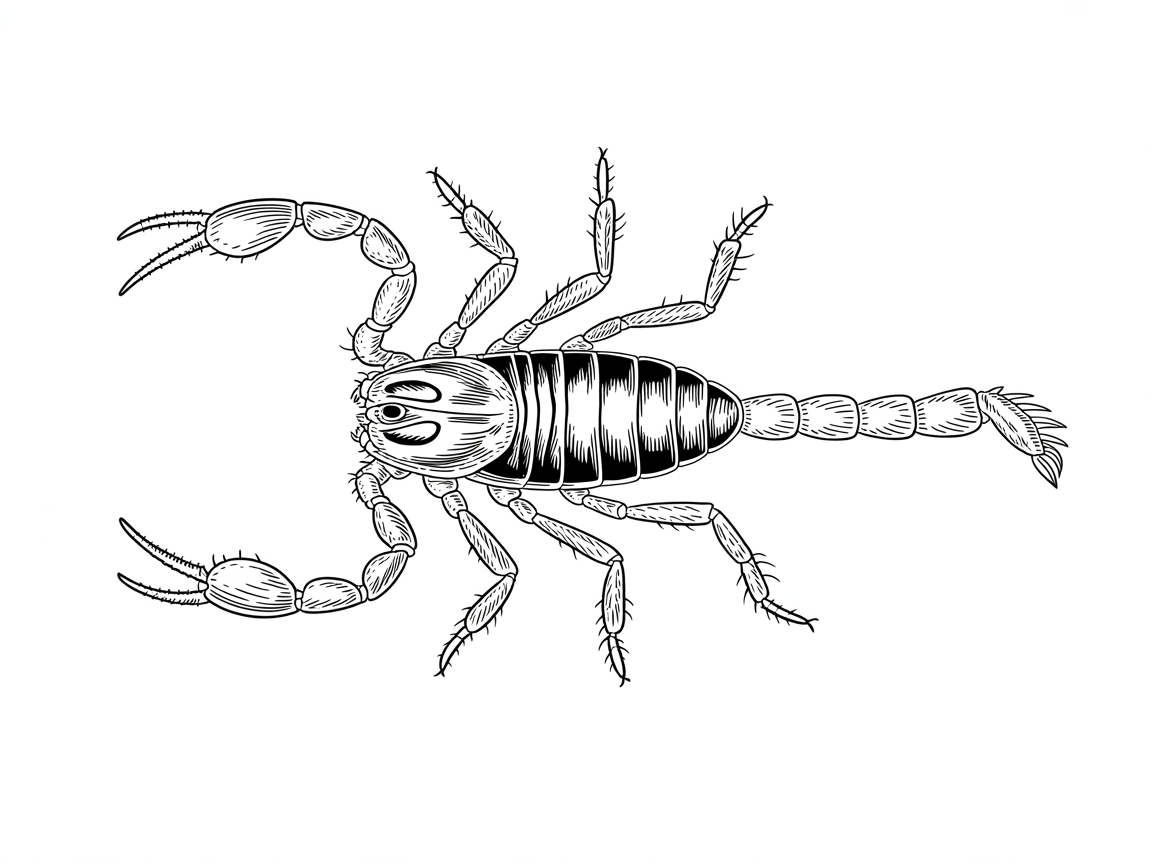
Scientific illustration for identification purposes
Overview
The striped bark scorpion is the most common and widely distributed scorpion in Texas and Oklahoma, and the only species found across the entire state of Texas. While their stings are painful, they are not considered life-threatening to healthy adults, though medical attention may be needed for children, elderly, or those with allergies.
How to Identify
- Yellowish-tan body with two dark longitudinal stripes
- Slender body and pincers (pedipalps)
- Segmented tail (metasoma) with stinger (telson) at tip
- Eight legs plus two pincers
- Dark triangular mark on front of head
- Glows bright blue-green under UV (blacklight)
Behavior
Striped bark scorpions are nocturnal, hiding during the day under rocks, bark, and debris. They are excellent climbers and can scale walls, trees, and even enter homes through gaps around rooflines. They do not burrow but seek shelter in existing cracks and crevices.
Habitat
Found under loose bark, rocks, logs, and debris outdoors. Inside homes, they are found in attics, wall voids, around foundations, and in dark, undisturbed areas. They often enter homes seeking water during dry periods. They are common in rural, suburban, and urban areas of Texas and Oklahoma.
Diet
Insects, spiders, centipedes, and other scorpions. They are ambush predators that detect prey through vibrations. They can survive months without food if water is available.
Reproduction
Females give live birth to 20-40 young after 8 months gestation. Young scorpions ride on the mothers back for 1-3 weeks until their first molt. They mature in about 4 years and may live 3-5 years total.
Distribution in the Southern U.S.
Most common in Central and West Texas, extending into Oklahoma. Less common in East Texas, Louisiana, and Mississippi. Populations highest in the Hill Country and Edwards Plateau regions.
Regional Notes
Texas is home to approximately 18 scorpion species, but the striped bark scorpion is by far the most commonly encountered. During hot, dry summers, scorpions frequently enter homes seeking moisture. They are particularly common in newer developments built on previously undisturbed land.
Signs of Infestation
- Scorpion sightings, especially at night
- Scorpions fluorescing under blacklight inspection
- Stings occurring in or around the home
- Presence in shoes, clothing, or bedding
- Many insects around the home (prey attraction)
Prevention Tips
- Seal cracks and gaps around doors, windows, and foundation
- Install door sweeps and weather stripping
- Remove debris, wood piles, and rock piles from near the house
- Keep grass short and vegetation trimmed away from foundation
- Eliminate standing water and fix irrigation leaks
- Shake out shoes, clothing, and bedding before use
- Use sticky traps to monitor for scorpions
- Reduce insect populations that attract scorpions
When to Contact a Professional
Contact a pest professional if you regularly find scorpions inside your home, have been stung, or have young children or family members with health concerns. Professional treatment includes perimeter barriers, crack and crevice treatment, and habitat modification recommendations.
Romex Pest Control provides professional striped bark scorpion control services across Texas, Oklahoma, Louisiana, and Mississippi.
Learn about our striped bark scorpion control servicesFrequently Asked Questions
Are scorpion stings dangerous?
Striped bark scorpion stings cause immediate pain, swelling, and numbness but are not life-threatening to healthy adults. However, children under 6, elderly individuals, and those with allergies may experience more severe reactions. Seek medical attention if symptoms spread beyond the sting site or if the victim has difficulty breathing.
Why are scorpions coming into my house?
Scorpions enter homes primarily seeking water during dry periods and shelter during temperature extremes. They follow prey insects inside and can squeeze through gaps as small as a credit card. New construction that disturbs their natural habitat often drives them indoors.
How can I find scorpions in my home?
Use a UV blacklight flashlight at night - scorpions glow bright blue-green under UV light. Check along walls, in corners, around doors, and in areas where you have seen insects. Focus on areas near water sources like bathrooms, kitchens, and laundry rooms.
Latest Research & News
Recent developments about striped bark scorpion
Get the latest news and research about striped bark scorpion
Click "Load News" to fetch recent articles from scientific sources