
Camel Cricket
Ceuthophilus species
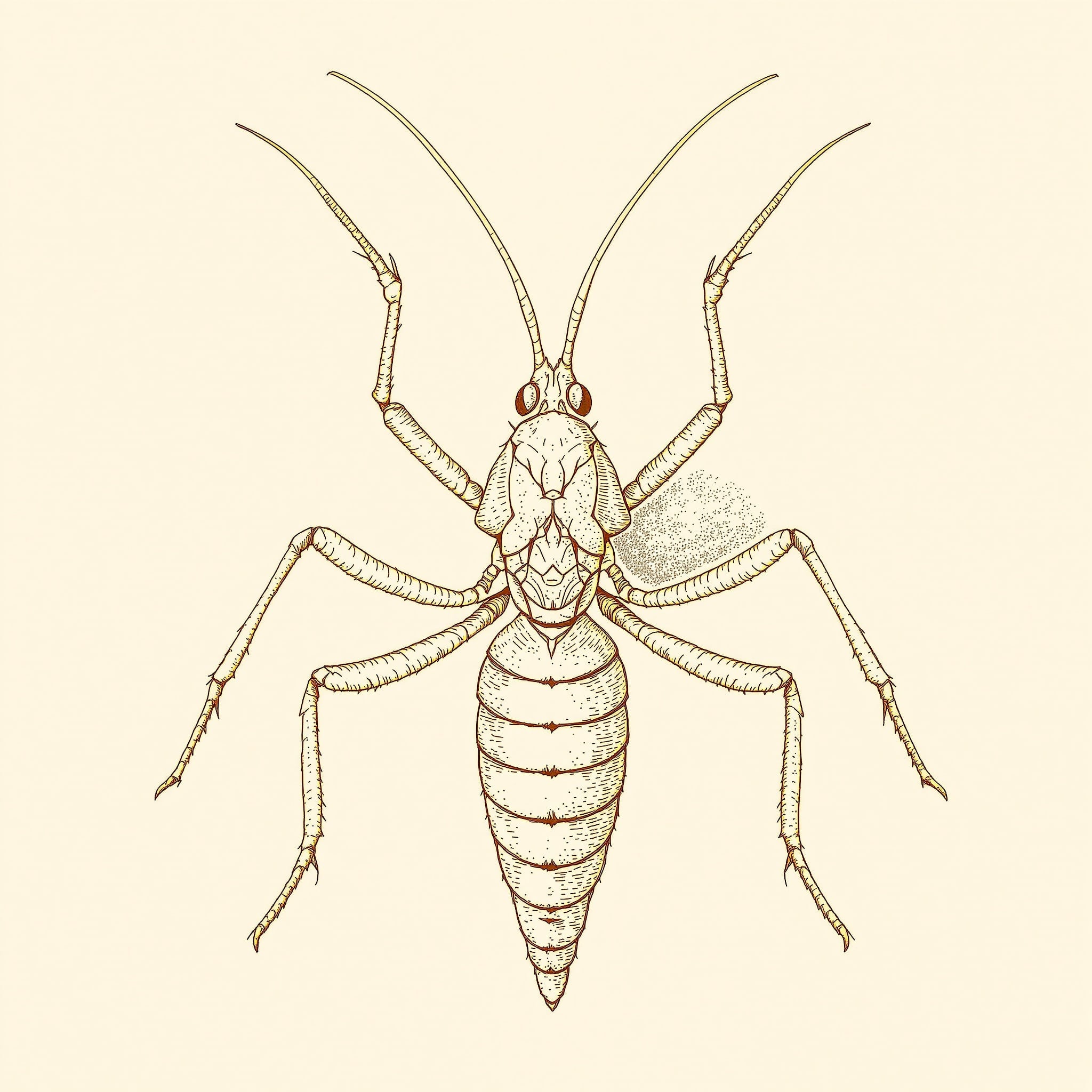
Scientific illustration for identification purposes
Overview
Camel crickets, also called cave crickets or spider crickets, are wingless insects with a distinctive humped appearance. They do not chirp like house crickets. They prefer dark, damp environments and often startle homeowners when they jump.
How to Identify
- Humped or camel-like appearance
- Light to dark brown color
- Very long antennae
- Large hind legs for jumping
- Wingless - do not chirp
- Can jump several feet when startled
Behavior
Camel crickets are nocturnal and prefer very dark, damp environments. They do not chirp since they have no wings. They can jump erratically and high when disturbed, often startling people.
Habitat
Naturally found in caves, wells, and under stones. In homes, they infest basements, crawl spaces, garages, and other damp areas. They may also live in stacks of firewood.
Diet
Omnivorous scavengers eating fungus, plant matter, fabric, paper, and other insects. They have been known to chew on clothing and paper products.
Reproduction
Females lay eggs in soil. Development is slow, taking 1-2 years to reach adulthood. They can breed indoors in suitable conditions.
Distribution in the Southern U.S.
Common throughout Texas, Oklahoma, Louisiana, and Mississippi in basements and crawl spaces.
Regional Notes
Often found in older homes with damp basements or crawl spaces. They thrive in the humid conditions common in Southern states.
Signs of Infestation
- Large jumping insects in basement or crawl space
- Crickets that jump erratically when disturbed
- Insects with humped back and very long antennae
- Damage to stored fabrics or paper in damp areas
- Crickets found behind stored items
Prevention Tips
- Reduce humidity in basements and crawl spaces
- Install dehumidifiers
- Seal gaps in foundation and around pipes
- Remove debris from foundation areas
- Store items off damp floors
- Improve ventilation in damp areas
When to Contact a Professional
Contact a professional for large populations or if humidity control measures are insufficient to eliminate the problem.
Romex Pest Control provides professional camel cricket control services across Texas, Oklahoma, Louisiana, and Mississippi.
Learn about our camel cricket control servicesFrequently Asked Questions
Why do camel crickets jump at me?
Camel crickets jump erratically when disturbed as a defensive behavior. They cannot see well and are trying to escape, not attack. Their jumps are unpredictable and may seem directed at you.
Do camel crickets bite?
Camel crickets do not bite humans. They have chewing mouthparts but are not aggressive. They are harmless nuisance pests, primarily indicating moisture problems.
Latest Research & News
Recent developments about camel cricket
Get the latest news and research about camel cricket
Click "Load News" to fetch recent articles from scientific sources