
House Cricket
Acheta domesticus
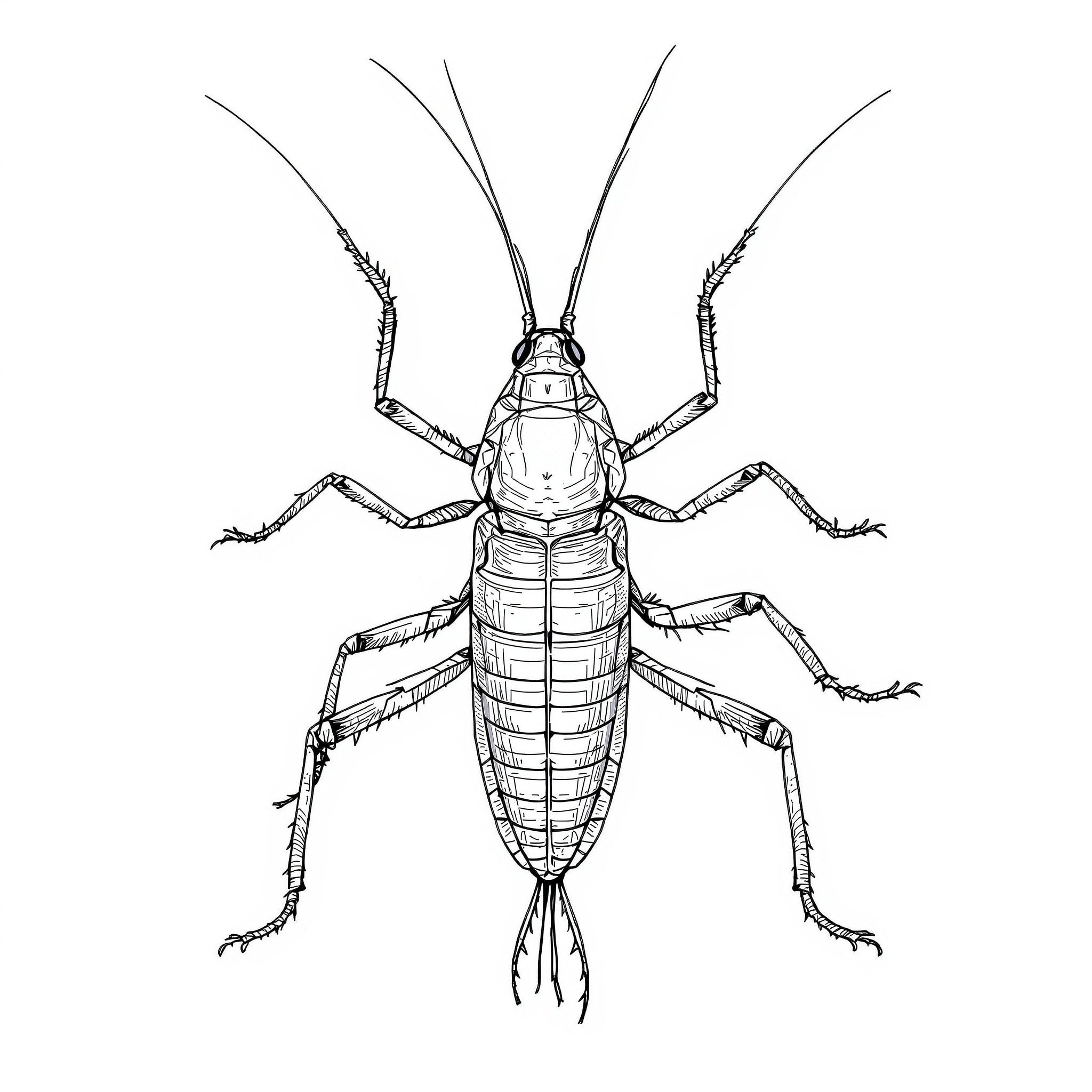
Scientific illustration for identification purposes
Overview
House crickets are common insects known for the males chirping song. While they do not pose health risks, large infestations can damage fabrics, paper, and stored foods. They often enter homes in fall seeking warmth.
How to Identify
- Cylindrical body 3/4 to 1 inch long
- Yellowish-brown color
- Three dark bands on head
- Long antennae
- Large jumping hind legs
- Wings extend past abdomen
Behavior
Male crickets chirp by rubbing their wings together, primarily at night. They are attracted to lights and warmth. In nature, they are beneficial decomposers.
Habitat
Outdoors in fields, tall grass, and debris piles. Enter homes through gaps seeking food, warmth, or moisture. Often found in basements, garages, and behind appliances.
Diet
Omnivorous - eat plant matter, other insects, and fabrics. In homes, they eat wool, silk, paper, and food crumbs.
Reproduction
Females lay 50-100 eggs in moist soil. Development takes 2-3 months. Multiple generations per year in warm conditions.
Distribution in the Southern U.S.
Common throughout Texas, Oklahoma, Louisiana, and Mississippi, particularly in fall.
Regional Notes
Crickets are especially numerous in the South during late summer and fall. They are attracted to commercial lighting and can congregate in large numbers.
Signs of Infestation
- Chirping sounds at night
- Crickets seen near lights at night
- Fabric damage, especially wool and silk
- Crickets jumping away when disturbed
- Dead crickets accumulating near lights
Prevention Tips
- Seal gaps around doors and windows
- Replace white lights with yellow "bug lights"
- Remove debris and woodpiles from foundation
- Keep grass and weeds trimmed
- Use dehumidifiers in damp areas
- Store fabrics in sealed containers
When to Contact a Professional
Contact a professional for large infestations, persistent indoor populations, or when DIY treatments are ineffective.
Romex Pest Control provides professional house cricket control services across Texas, Oklahoma, Louisiana, and Mississippi.
Learn about our house cricket control servicesFrequently Asked Questions
Why do crickets chirp more at night?
Male crickets chirp to attract females. They are most active at night when temperatures are favorable and predators are less active. Chirping rate actually increases with temperature.
Are house crickets harmful?
House crickets are nuisance pests that can damage fabrics and contaminate food. They do not bite or spread disease. The main concerns are noise, fabric damage, and food contamination.
Latest Research & News
Recent developments about house cricket
Get the latest news and research about house cricket
Click "Load News" to fetch recent articles from scientific sources