
Carpenter Ant
Camponotus species
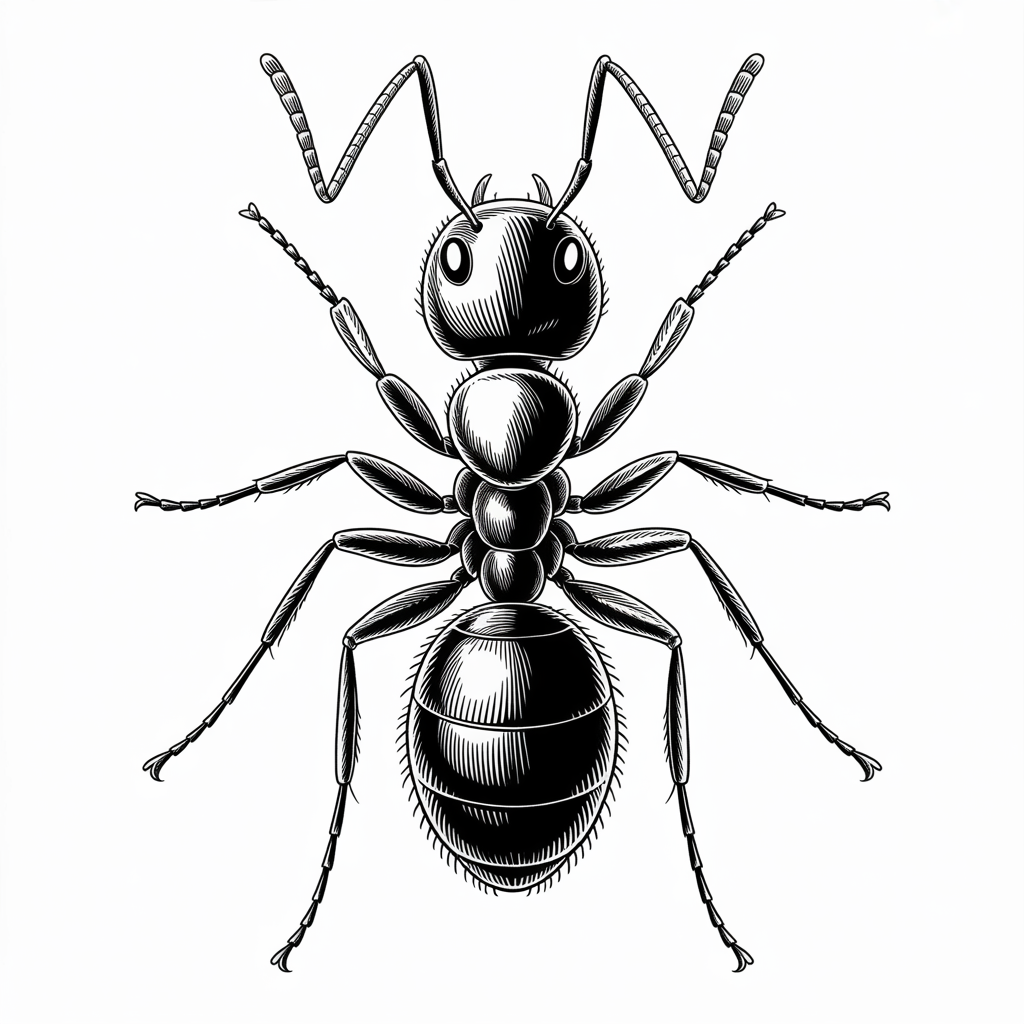
Scientific illustration for identification purposes
Overview
Carpenter ants are among the largest ants in the United States and are major structural pests. Unlike termites, they do not eat wood but excavate it to create smooth tunnels and galleries for nesting, pushing out sawdust-like frass.
How to Identify
- Large size - workers vary from 1/4 to 1/2 inch
- Heart-shaped head when viewed from front
- Single node (petiole) between thorax and abdomen
- Evenly rounded thorax profile
- Elbowed antennae with 12 segments
Behavior
Carpenter ants establish parent colonies in moist, decaying wood and satellite colonies in drier locations. They are most active at night and can travel up to 300 feet from their nest. They communicate using pheromones and can create audible rustling sounds within walls.
Habitat
Prefer moist, decaying wood including dead trees, stumps, and logs. In homes, they target water-damaged wood around windows, doors, sinks, bathtubs, and roof leaks. They nest in wall voids, hollow doors, and foam insulation.
Diet
Omnivorous - feed on living and dead insects, honeydew from aphids, and household sweets. They do not eat wood but excavate it for nesting.
Reproduction
Mature colonies produce winged reproductives (swarmers) in spring. A queen can live 25+ years and produce millions of offspring. New colonies take 3-6 years to mature.
Distribution in the Southern U.S.
Found throughout Texas, Oklahoma, Louisiana, and Mississippi. Most common in wooded areas and suburban developments near forests.
Regional Notes
In the humid Southern climate, carpenter ant infestations are often associated with moisture problems. Regular inspections after heavy rains are recommended.
Signs of Infestation
- Piles of sawdust-like frass near wood surfaces
- Rustling sounds within walls, especially at night
- Winged ants emerging indoors in spring
- Smooth, clean galleries in damaged wood
- Large black ants foraging, especially at night
Prevention Tips
- Eliminate moisture problems and repair water leaks promptly
- Replace water-damaged wood immediately
- Store firewood away from the house and elevated
- Trim tree branches that touch the house
- Seal cracks and gaps around the foundation
- Remove dead stumps and decaying wood from property
When to Contact a Professional
Contact a professional if you see multiple large black ants indoors, find wood shavings or frass, hear sounds in walls, or discover structural wood damage.
Romex Pest Control provides professional carpenter ant control services across Texas, Oklahoma, Louisiana, and Mississippi.
Learn about our carpenter ant control servicesFrequently Asked Questions
Do carpenter ants eat wood?
No, carpenter ants do not eat wood. They excavate galleries in wood for nesting and push out the debris as sawdust-like frass. This distinguishes them from termites, which actually consume wood.
How do I tell carpenter ants from termites?
Carpenter ants have elbowed antennae, a narrow waist, and dark coloring. Termites have straight antennae, a thick waist, and pale coloring. Carpenter ants produce clean, smooth galleries while termite galleries are rough and filled with mud.
Latest Research & News
Recent developments about carpenter ant
Get the latest news and research about carpenter ant
Click "Load News" to fetch recent articles from scientific sources