
Red Imported Fire Ant
Solenopsis invicta
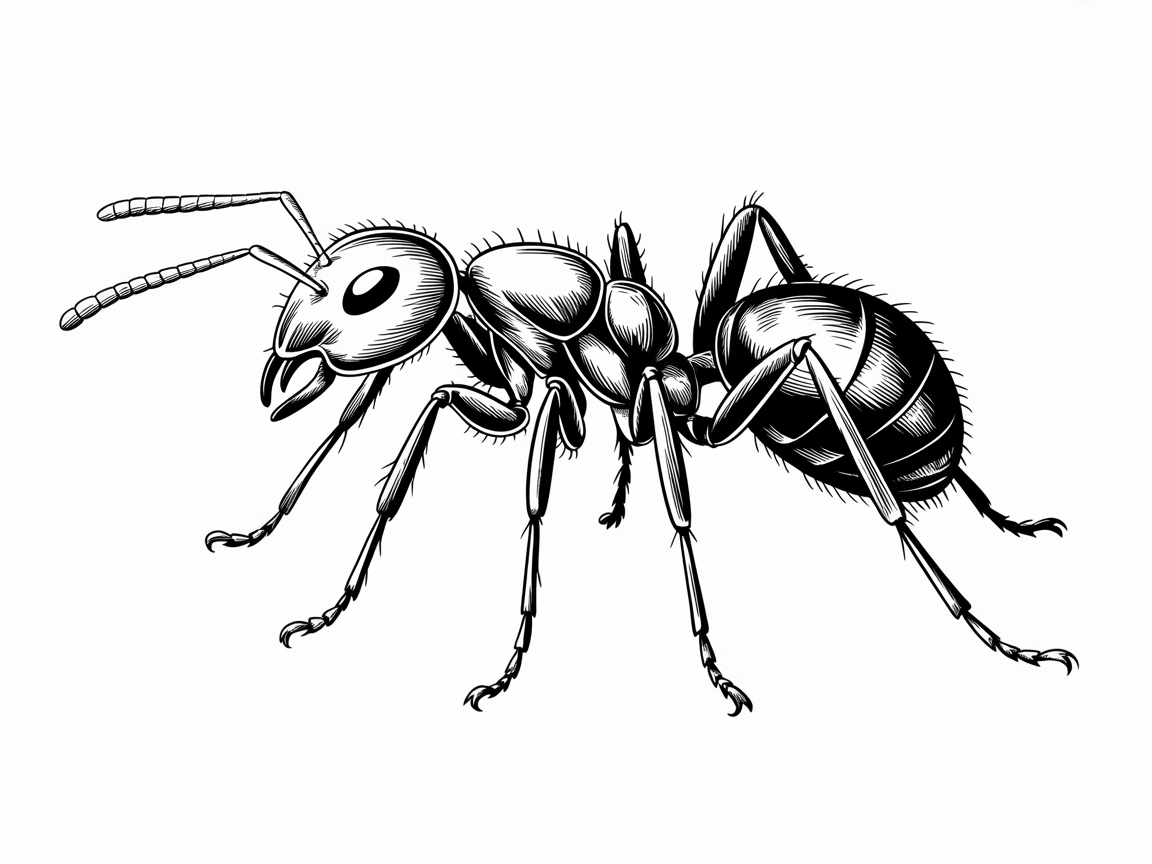
Scientific illustration for identification purposes
Overview
The Red Imported Fire Ant (RIFA) is an invasive species that arrived in the United States through the port of Mobile, Alabama around the 1930s. These aggressive ants are notorious for their painful stings and large mound-building colonies that can contain 100,000 to 500,000 workers.
How to Identify
- Reddish-brown head and body with darker abdomen
- Workers vary in size (polymorphic) within the same colony
- Two-segmented waist (pedicel) between thorax and abdomen
- 10-segmented antennae with 2-segmented club
- Stinger present on abdomen (not visible without magnification)
Behavior
Fire ants are highly aggressive and will attack in large numbers when their mound is disturbed. They anchor themselves with their mandibles and sting repeatedly, injecting alkaloid venom. Colonies exhibit polygyny (multiple queens) which allows rapid spread. They are attracted to electrical equipment and can cause damage to air conditioning units, traffic signals, and electrical boxes.
Habitat
Fire ants prefer open, sunny areas and build dome-shaped mounds in lawns, pastures, parks, and along roadsides. Mounds can reach 18 inches in height and 24 inches in diameter. They also nest under objects like landscape timbers, logs, and rocks. During floods, fire ants form floating rafts to survive.
Diet
Omnivorous feeders consuming insects, earthworms, ticks, spiders, honeydew from aphids, seeds, and young plants. They are also attracted to oily and greasy foods, making outdoor eating areas vulnerable.
Reproduction
Mated queens can lay up to 1,500 eggs per day. Eggs develop into adults in 22-38 days depending on temperature. Colonies produce winged reproductive males and females (alates) that swarm typically after rain events from spring through fall.
Distribution in the Southern U.S.
Established throughout Texas, Oklahoma, Louisiana, Mississippi, and the entire Gulf Coast region. Most dense populations occur in East Texas, Central Texas, and along the I-35 corridor.
Regional Notes
Fire ants cause an estimated $6 billion annually in damage and medical costs in the United States. In Texas alone, agricultural losses exceed $1.2 billion per year. The hot, humid climate of the Southern states provides ideal conditions for fire ant proliferation.
Signs of Infestation
- Dome-shaped mounds in yard, especially after rain
- Mounds with no visible entrance hole on top
- Ants swarming when ground is disturbed
- Multiple stings resulting in pustules within 24 hours
- Dead patches in lawn where mounds exist
Prevention Tips
- Inspect yard regularly for new mounds, especially after rain
- Treat mounds promptly before colonies mature
- Apply broadcast bait treatments in spring and fall
- Remove debris and objects that provide nesting sites
- Seal entry points around the home foundation
- Be cautious when working in yards or gardens
When to Contact a Professional
Contact a pest control professional if you have multiple mounds, mounds near play areas or walkways, if anyone in your household has allergies to insect stings, or if DIY treatments have been ineffective after 2-3 applications.
Romex Pest Control provides professional red imported fire ant control services across Texas, Oklahoma, Louisiana, and Mississippi.
Learn about our red imported fire ant control servicesFrequently Asked Questions
How dangerous are fire ant stings?
Fire ant stings cause immediate burning pain and develop into pustules within 24 hours. While most people experience only localized reactions, approximately 1-2% of the population can have severe allergic reactions (anaphylaxis) that require emergency medical attention. Fire ants are responsible for approximately 30-60 deaths per year in the United States.
Why do fire ants keep coming back after treatment?
Fire ant colonies are highly resilient. If the queen survives treatment, the colony will rebuild. Additionally, new queens continuously fly in from neighboring areas to establish new colonies. Effective management requires a combination of broadcast baits and individual mound treatments, applied at the right time of year.
What is the best time of year to treat fire ants?
The most effective treatment times are spring (April-May) and fall (September-October) when fire ants are actively foraging. Avoid treating during extreme heat (above 95°F) or when soil is too dry, as ants retreat deep into the mound and will not encounter treatments.
Latest Research & News
Recent developments about red imported fire ant
Get the latest news and research about red imported fire ant
Click "Load News" to fetch recent articles from scientific sources