
Kissing Bug
Triatoma species
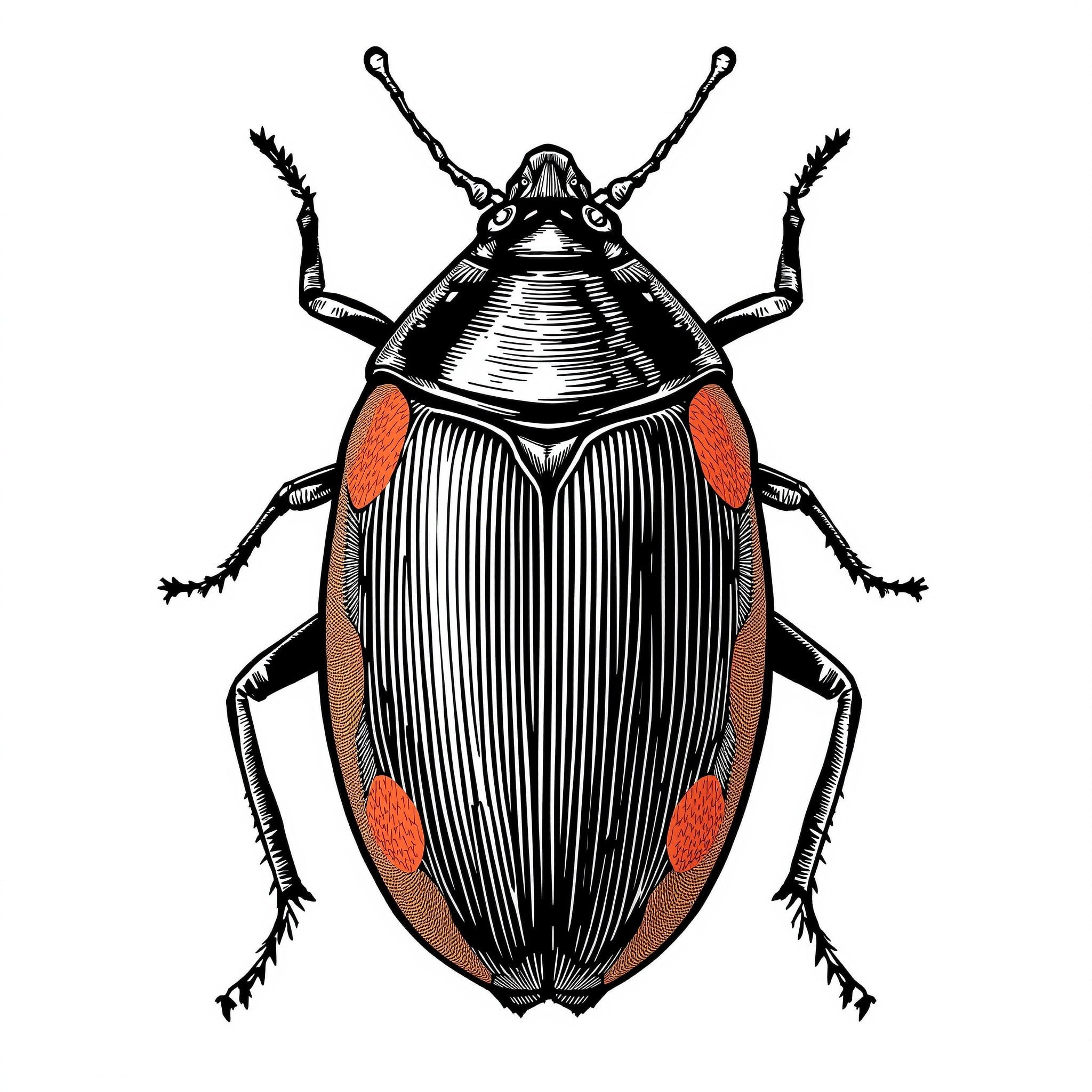
Scientific illustration for identification purposes
Overview
Kissing bugs are blood-feeding insects that can transmit Chagas disease, a potentially serious parasitic infection. They typically bite people on the face while sleeping (hence "kissing bug"). They are nocturnal and hide during the day.
How to Identify
- Elongated oval body 1/2 to 1 inch
- Dark brown or black color
- Red or orange stripes on edges of abdomen
- Cone-shaped head with long beak
- Nocturnal - hide during day
Behavior
Kissing bugs are nocturnal blood feeders that hide in cracks during the day. They typically bite sleeping victims on the face. They defecate while feeding, which is how Chagas disease is transmitted if feces enter the bite wound.
Habitat
Found in and around wood piles, pack rat nests, outdoor dog houses, chicken coops, and brush piles. Can enter homes through gaps and cracks.
Diet
Blood feeders that prey on mammals including humans, dogs, and wildlife. All life stages feed on blood.
Reproduction
Females lay eggs in cracks and crevices. Development from egg to adult takes 1-2 years depending on blood meal availability.
Distribution in the Southern U.S.
Found throughout Texas, Oklahoma, Louisiana, and Mississippi, particularly in rural areas.
Regional Notes
Texas has the highest diversity of kissing bug species in the US. Chagas disease transmission risk is lower than in Latin America but is a growing concern.
Signs of Infestation
- Bugs found in or around home, especially at night
- Bites on face after sleeping
- Bugs found near outdoor pet bedding
- Pack rat nests near home
- Bugs attracted to porch lights
Prevention Tips
- Seal cracks and gaps around doors and windows
- Install door sweeps
- Repair torn screens
- Remove wood piles and brush near home
- Eliminate pack rat nests
- Bring pet beds indoors at night
When to Contact a Professional
Contact a professional if you find kissing bugs in or around your home. Also consult a physician if bitten, as testing for Chagas disease may be recommended.
Romex Pest Control provides professional kissing bug control services across Texas, Oklahoma, Louisiana, and Mississippi.
Learn about our kissing bug control servicesFrequently Asked Questions
How is Chagas disease transmitted?
Chagas disease is NOT transmitted through the bite itself. The parasite is in the bug feces. Transmission occurs when feces are rubbed into the bite wound, eyes, or mouth. Keep bites clean and do not scratch.
Should I be tested for Chagas disease?
If you have been bitten by a confirmed kissing bug or live in an area with kissing bugs, consult your physician about testing, especially if you experience fever, fatigue, or swelling at the bite site.
Latest Research & News
Recent developments about kissing bug
Get the latest news and research about kissing bug
Click "Load News" to fetch recent articles from scientific sources