
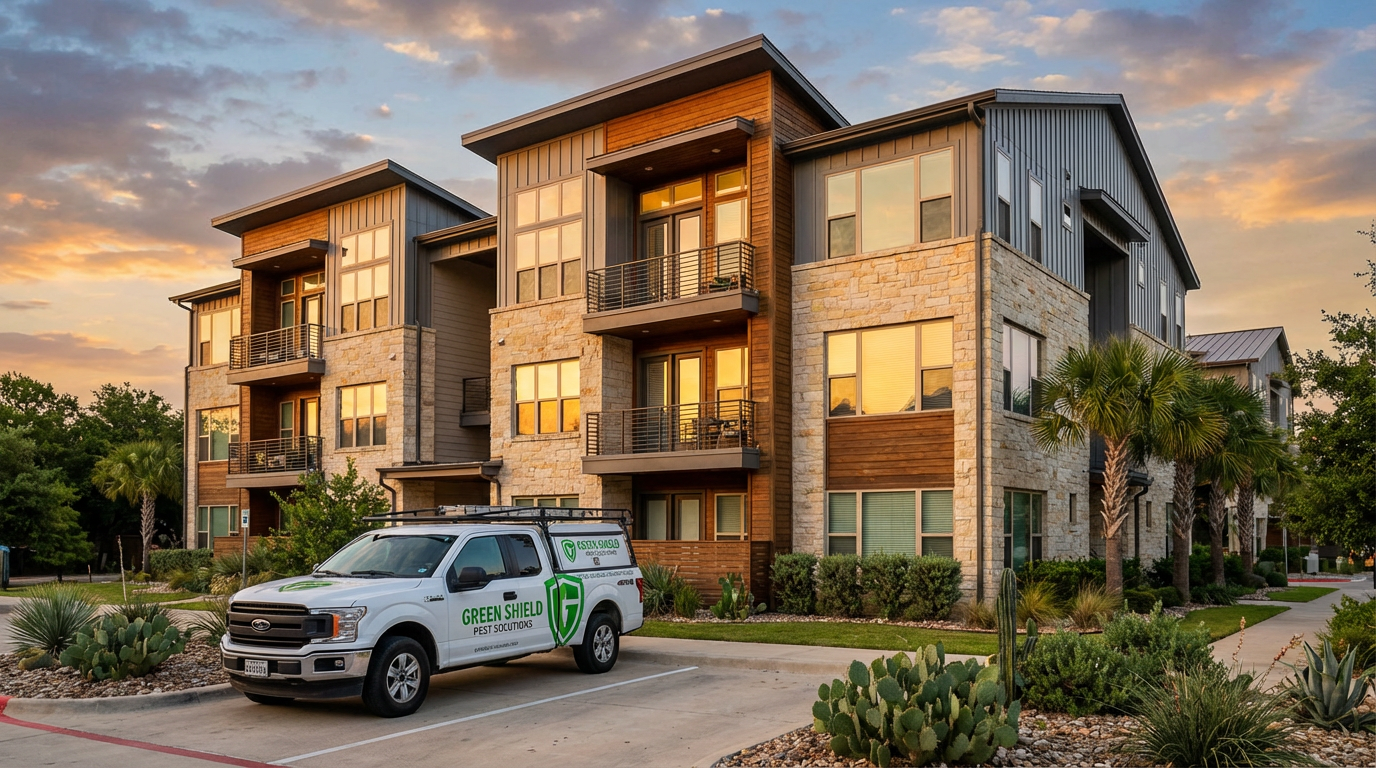
Why Apartments Have a German Cockroach Problem
German cockroaches thrive in multi-unit housing for the same reasons they thrive in any home—warmth, moisture, food access, and abundant harborage. But apartments add a critical complication: shared walls, shared plumbing, and shared ventilation systems that allow roaches to travel freely between units.
This means that even if you keep your apartment spotlessly clean, German cockroaches can migrate in from neighboring units through pipe chases, electrical conduits, gaps around shared walls, and HVAC ductwork. A single heavily infested unit can seed an entire floor or building with roaches that spread through the infrastructure.
This shared-wall reality makes apartment cockroach control fundamentally different from single-family home treatment—and it raises important questions about who is responsible for the problem and the solution.
Texas Law: Landlord Responsibilities
Texas property law addresses pest infestations under the implied warranty of habitability outlined in Chapter 92 of the Texas Property Code. While Texas law does not have a single, explicit statute mandating pest control, the legal framework provides tenants with meaningful protections.
The Implied Warranty of Habitability
Under Texas law, landlords are required to maintain rental properties in a condition that is fit for human habitation. A significant cockroach infestation that affects the health and safety of occupants—which German cockroaches do through allergen exposure, asthma triggers, and disease transmission—can constitute a violation of this warranty.
For this protection to apply, the tenant must:
- Be current on rent payments
- Not have caused the condition through their own actions or negligence
- Provide written notice to the landlord describing the problem and requesting repair/treatment
- Allow the landlord a reasonable time to respond (courts have generally interpreted this as 7 days for urgent health-related conditions)

When Tenants May Be Held Responsible
Texas law recognizes that tenants may bear responsibility for pest infestations in certain circumstances:
- If the tenant's actions or living conditions directly caused or attracted the infestation
- If the lease agreement explicitly assigns pest control responsibility to the tenant (common in Texas leases)
- If the tenant failed to report the problem in a timely manner, allowing it to worsen
Many Texas apartment leases include clauses that make tenants responsible for pest control after a specific period (often 30 days after move-in). Review your lease carefully to understand your specific obligations.
Steps to Take When You Find German Cockroaches in Your Apartment
Step 1: Document Everything
Before contacting your landlord, document the infestation thoroughly:
- Take dated photos and videos of live roaches, droppings, egg cases, and damage
- Note the locations and frequency of sightings
- Record the date you first noticed signs of infestation
- If applicable, document any health symptoms that may be related to cockroach allergens
Step 2: Submit Written Notice to Your Landlord
Texas law requires written notice for the implied warranty protections to apply. Send a written letter or email to your landlord or property management company that includes:
- A clear description of the cockroach infestation
- The date you first observed the problem
- A specific request for professional pest control treatment
- A reasonable deadline for response (7 days is standard for health-related issues)
- Photos or evidence of the infestation
Keep copies of all correspondence. If you send a physical letter, use certified mail so you have proof of delivery.
Step 3: Understand Your Options if the Landlord Does Not Respond
If your landlord fails to act within a reasonable timeframe after receiving written notice, Texas tenants have several potential remedies:
- Repair and deduct: In some cases, tenants may hire pest control and deduct the cost from rent—but this remedy has specific legal requirements and should be done with legal guidance
- File a complaint: Contact your local code enforcement office or health department to report uninhabitable conditions
- Seek legal assistance: Texas RioGrande Legal Aid, Lone Star Legal Aid, and local tenant rights organizations can provide guidance
- Terminate the lease: In severe cases where conditions materially affect health and safety and the landlord refuses to act, lease termination may be justified
Why Apartment Cockroach Treatment Must Be Building-Wide
Here is the uncomfortable truth about apartment cockroach treatment: treating a single unit is almost never sufficient. German cockroaches travel between units through the building's infrastructure, and treating one apartment simply pushes roaches into untreated neighboring units—where they continue breeding and eventually migrate back.
Effective apartment cockroach control requires coordinated treatment of multiple units, ideally including all units adjacent to and above/below the infested unit, plus common areas. This is why landlord involvement and professional pest control service are essential—individual tenants cannot coordinate building-wide treatment on their own.
What You Can Do Right Now
While waiting for your landlord to arrange professional treatment, or if you need to address the problem independently, these steps help reduce the population and protect your family:
- Seal entry points: Caulk gaps around pipes under sinks and behind toilets, fill gaps around electrical outlets on shared walls with foam sealant, and seal the gap between cabinet bases and walls
- Eliminate food and water sources: Fix dripping faucets, wipe down all surfaces before bed, store food in sealed glass or plastic containers, and empty pet water bowls overnight
- Reduce clutter: Remove paper bags, cardboard boxes, and unnecessary items from kitchen areas—these provide harborage
- Use gel bait stations: Place commercial gel bait stations (not sprays) in areas where you have seen activity—under sinks, behind the refrigerator, and in cabinet corners
- Never use bug bombs: Total-release foggers are ineffective against German cockroaches and will spread the infestation through your apartment and into neighboring units through shared air ducts
Professional Treatment for Apartments
Romex Pest Control provides German cockroach treatment for both individual apartments and multi-unit properties across Texas, Oklahoma, Louisiana, and Mississippi. Our apartment treatment approach includes targeted gel bait applications, insect growth regulators, and crack-and-crevice treatments designed for the shared-wall environments where German cockroaches thrive.
Whether you are a tenant dealing with an infestation or a property manager needing building-wide treatment, contact us for German cockroach treatment starting at $149 per treatment.