
The Problem With Store-Bought Cockroach Sprays
Every year, American homeowners spend hundreds of millions of dollars on over-the-counter cockroach sprays, bombs, and traps. And every year, German cockroach infestations persist in millions of homes despite these efforts. The disconnect between the money spent and the results achieved is not a coincidence—it is a predictable outcome of German cockroach biology colliding with the limitations of consumer-grade pesticide products.
Understanding why German cockroaches survive common treatments is not just academically interesting. It is practically essential for anyone who wants to actually solve the problem instead of repeatedly spending money on products that provide temporary relief at best.
Reason 1: Widespread Pesticide Resistance
German cockroaches have developed documented resistance to multiple classes of insecticides, with the most severe resistance found against pyrethroids—the active ingredient in the vast majority of over-the-counter roach sprays sold at hardware and grocery stores.
Research from Purdue University found that some German cockroach populations have developed resistance to multiple insecticide classes simultaneously. In a 2019 study, researchers discovered that cockroach populations exposed to a single insecticide class could develop cross-resistance to other classes they had never encountered—meaning the roaches became harder to kill with chemicals they had never been exposed to.
How Resistance Develops
Resistance operates through two primary mechanisms:
- Metabolic resistance: Enhanced production of cytochrome P450 enzymes that break down insecticide molecules before they reach lethal concentrations in the cockroach's nervous system
- Target-site resistance (kdr mutation): A genetic mutation (L993F) that alters the nerve cell sodium channels—the exact target of pyrethroid insecticides—rendering the chemical unable to bind effectively
Because German cockroach generations turn over every 60 to 100 days and each female produces hundreds of offspring, resistance genes spread through populations extremely quickly. A single resistant female can seed an entire colony with resistance traits within a few months.
Reason 2: Repellent Sprays Scatter the Colony
Most aerosol cockroach sprays contain pyrethroid insecticides that are highly repellent—roaches detect and avoid treated surfaces. While this might sound beneficial, it actually makes the problem worse in practice.
When you spray a cabinet under the sink, the roaches in that harborage area detect the chemical and flee—not to die, but to find new, untreated hiding places. A colony that was concentrated in one area of your kitchen is now scattered throughout the kitchen, into adjacent rooms, into wall voids, and potentially into neighboring apartments. You have traded one localized colony for multiple satellite colonies spread across a larger area.
This dispersal effect is one of the primary reasons university extension services and pest management professionals explicitly recommend against using aerosol sprays for German cockroach infestations.
Reason 3: Bug Bombs Are Worse Than Useless
Total-release foggers ("bug bombs") are among the least effective tools for German cockroach control. The aerosolized insecticide cannot penetrate the cracks, crevices, and wall voids where the vast majority of the cockroach population hides. The chemical settles on open surfaces that roaches rarely traverse while leaving harborage areas completely untouched.
Studies have consistently shown that foggers fail to reduce German cockroach populations and can actually increase allergen levels in homes by dispersing cockroach feces and body fragments into the air. They also deposit pesticide residues on food preparation surfaces, dishes, and children's play areas—creating health risks without delivering pest control benefits.
Reason 4: Reproductive Speed Outpaces DIY Treatment
Even if a DIY treatment kills 90% of the visible cockroaches, the remaining 10%—plus the eggs protected inside oothecae—can rebuild the population to pre-treatment levels within 4 to 8 weeks. As we detailed in our lifecycle guide, a single female produces 200 to 400 eggs in her lifetime, and those offspring reach reproductive maturity in as few as 60 days.
This means that any treatment approach that does not achieve near-complete elimination—and sustain that pressure through the hatching period of existing egg cases—is essentially a temporary setback for the colony, not a solution.

What Actually Works: The Professional Approach
Effective German cockroach elimination requires a multi-tool approach that overcomes resistance, avoids dispersal, and targets all life stages. Here is what professional treatment looks like:
Non-Repellent Gel Baits
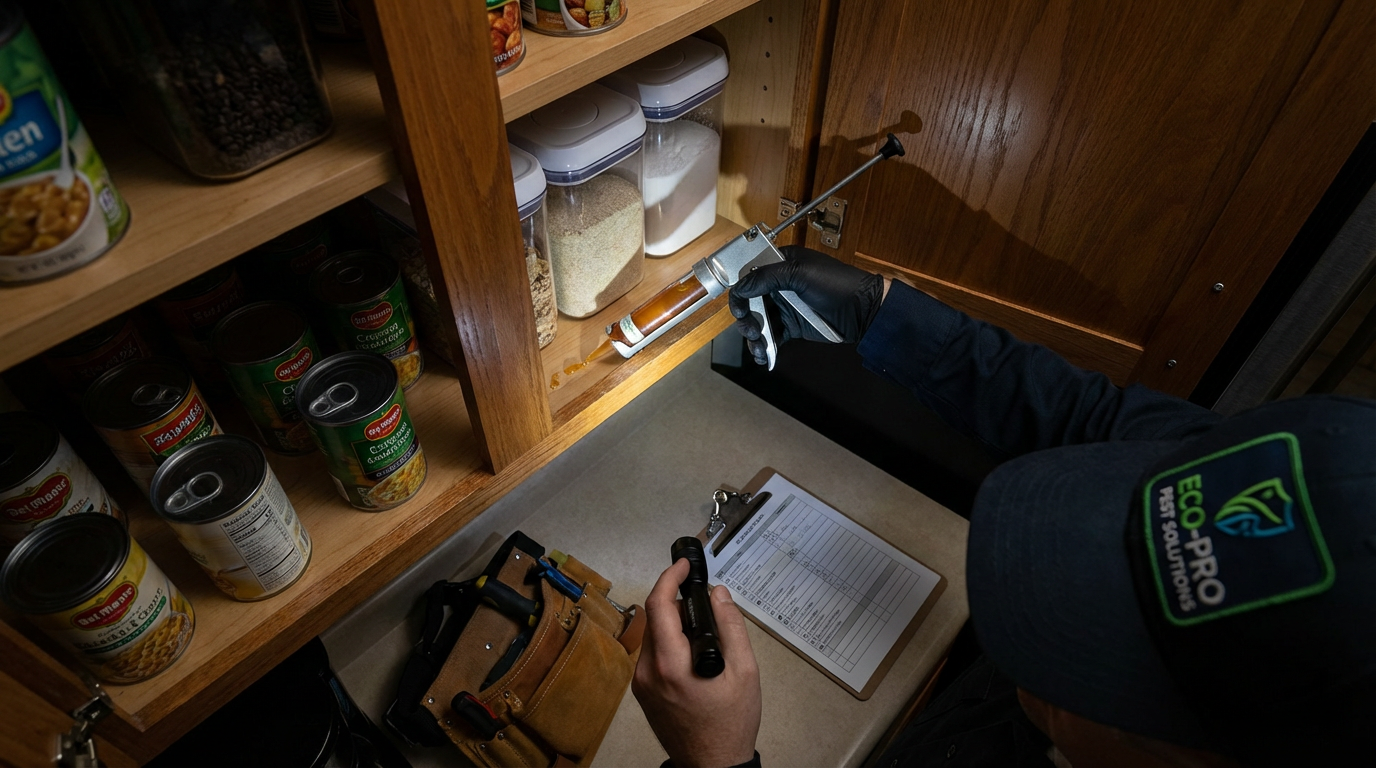
Professional-grade gel baits are the cornerstone of modern German cockroach treatment. Unlike sprays, gel baits are non-repellent—cockroaches consume them willingly. The active ingredients work through both primary kill (the roach that eats the bait) and secondary kill (roaches that contact the feces or body of a poisoned nestmate). This secondary transfer effect means a single bait placement can eliminate roaches deep within wall voids that no spray could ever reach.
Insect Growth Regulators (IGRs)
IGRs are synthetic compounds that mimic insect hormones, disrupting the molting process in nymphs and preventing oothecae from developing viable embryos. They do not kill adult cockroaches directly but effectively sterilize the population, preventing the next generation from maturing. When combined with gel baits that kill adults, IGRs create a one-two punch that collapses the population from both ends.
Crack-and-Crevice Applications
Rather than broadcasting pesticide across open surfaces (like aerosol sprays do), crack-and-crevice treatments deliver non-repellent formulations directly into the harborage zones where cockroaches actually live. This targeted approach maximizes contact with the target population while minimizing exposure to household surfaces.
Monitoring and Follow-Up
Professional treatment includes sticky monitor traps placed in strategic locations to track population levels over time. Follow-up visits address newly hatched nymphs from egg cases that were present before initial treatment. This sustained approach is essential because no single treatment kills 100% of eggs—the follow-up catches what the initial treatment could not.
Stop Wasting Money on Products That Do Not Work
If you have been fighting German cockroaches with store-bought sprays and the problem keeps coming back, you are not failing—the products are failing you. German cockroach biology has evolved to survive exactly the kind of chemical exposure that consumer products deliver.
Romex Pest Control's German cockroach treatment uses the professional tools and techniques described above, starting at $149 per treatment. We serve homes across Texas, Oklahoma, Louisiana, and Mississippi. Contact us today to break the cycle of ineffective DIY treatments and get lasting results.