
Why Early Detection Matters
German cockroaches are masters of concealment. They are nocturnal, thigmotactic (they prefer to squeeze into tight spaces), and reproduce at a rate that turns a small population into a full-blown infestation in weeks. By the time most homeowners realize they have a problem, the colony has been growing undetected for weeks or even months.
The key to manageable, cost-effective treatment is catching an infestation early. A small colony of 20 to 50 roaches is far easier and less expensive to eliminate than an established population of several thousand. Here are the seven most reliable warning signs that German cockroaches have moved into your home.
Sign 1: Pepper-Like Droppings in Cabinets and Drawers
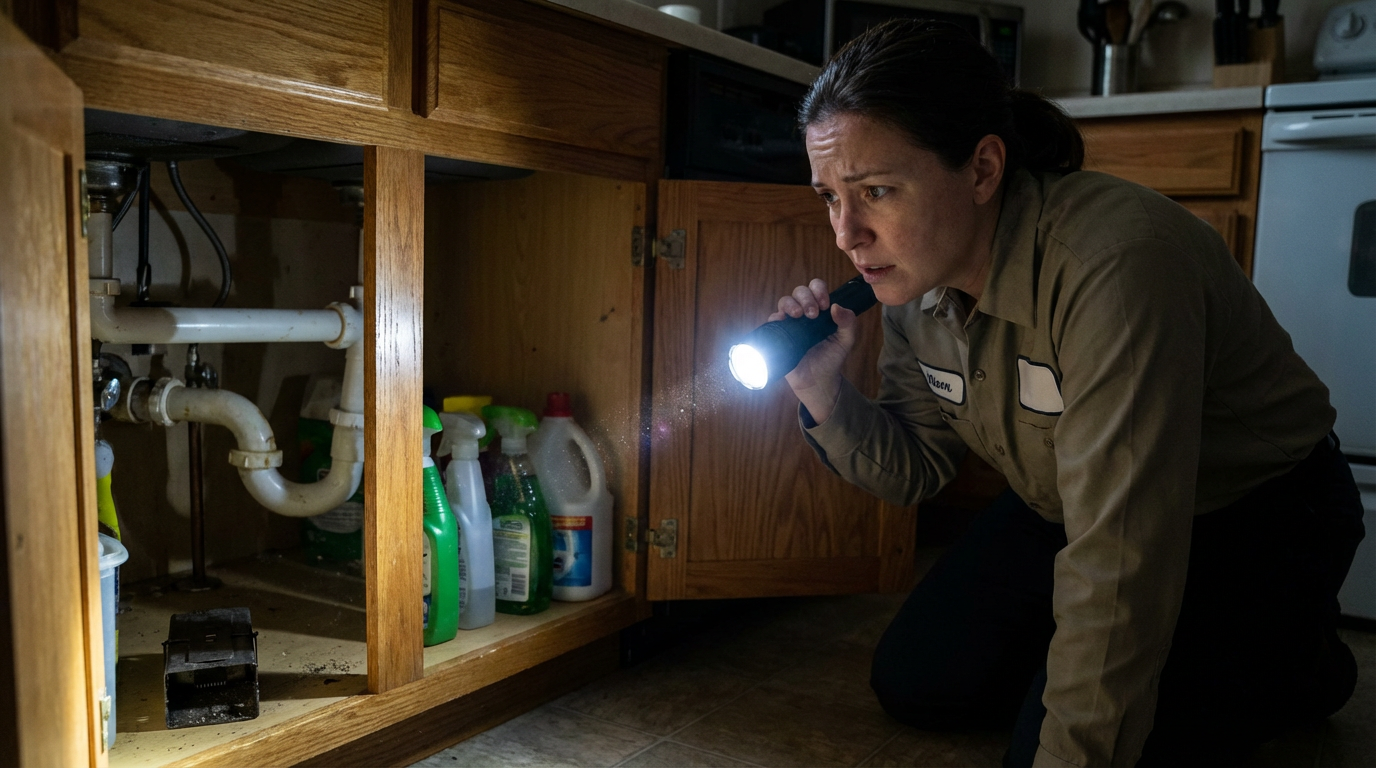
German cockroach droppings are the most common first sign of an infestation. They appear as tiny dark specks or smears that look like ground black pepper or coffee grounds. You will find them concentrated in areas where roaches travel regularly:
- Inside upper corners of cabinets and along shelf edges
- In the crevices where cabinet doors meet frames
- Along the top edges of door frames, especially in kitchens and bathrooms
- Inside drawers, particularly in silverware and utensil drawers
- Behind and underneath appliances
Heavy accumulations of droppings leave dark, streak-like staining that is difficult to remove. If you find droppings concentrated in a specific area, the harborage site is nearby—German cockroaches do not travel far from their hiding spots.
Sign 2: Egg Cases (Oothecae)
Finding empty or intact oothecae is a clear sign of an active breeding population. German cockroach egg cases are light brown, capsule-shaped, about 8 millimeters long, and have a ridged seam running along one edge. You may find them:
- In the gap between refrigerator and wall
- Inside the motor housing area of refrigerators
- Glued to the underside of shelves and cabinet tops
- In boxes and paper bags stored in the pantry
- Behind picture frames and wall decorations in the kitchen

Empty oothecae (split open along the seam) indicate that eggs have already hatched—meaning nymphs are already active in your home. Intact oothecae mean eggs are still developing. Either finding demands immediate action.
Sign 3: Musty, Oily Odor
German cockroaches produce aggregation pheromones—chemical signals that attract other roaches to join the colony in a harborage area. These pheromones, combined with the odor of accumulated droppings and shed exoskeletons, create a distinctive musty, oily smell that is sometimes described as "stale" or "sour."
In small infestations, the odor may not be noticeable. In moderate to heavy infestations, you can often detect it when opening cabinets under sinks, pulling out the refrigerator, or entering a closed room first thing in the morning. If your kitchen has a persistent unpleasant odor that you cannot trace to spoiled food or plumbing, cockroaches may be the cause.
Sign 4: Nighttime Sightings in the Kitchen or Bathroom
Seeing a cockroach at night is a more significant indicator than most people realize. German cockroaches are strongly nocturnal—they leave their harborage areas to forage only when they sense darkness, quiet, and safety. If you walk into a dark kitchen, turn on the light, and see roaches scatter, you are witnessing a foraging event that happens nightly.
A single sighting at night suggests a resident population. Where there is one, there are many—German cockroaches live in groups, and the one you see represents a fraction of the colony hiding in nearby cracks and voids.
Sign 5: Daytime Sightings (A Red Flag for Severe Infestation)
If you see German cockroaches during daylight hours, the infestation is likely severe. Daytime activity means the harborage areas are so overcrowded that some individuals are being pushed out into open spaces to find food, water, and new hiding spots. University entomologists consider daytime cockroach activity one of the most reliable indicators of a heavy infestation requiring immediate professional intervention.
Sign 6: Shed Exoskeletons (Molt Skins)
As German cockroach nymphs grow through their 5 to 7 instar stages, they shed their exoskeleton at each molt. These translucent, light brown cast skins accumulate in harborage areas and are often found:
- Behind appliances near the wall
- Inside motor compartments of refrigerators and dishwashers
- In the gaps between cabinets and walls
- Under sink cabinets near plumbing penetrations
Shed exoskeletons are also a significant source of cockroach allergens, contributing to asthma and allergy symptoms in sensitized individuals. Finding them is both a sign of active infestation and a health concern.
Sign 7: Smear Marks on Walls and Surfaces
In areas with high moisture—around sinks, near dishwashers, in bathroom cabinets—German cockroaches leave dark, irregular smear marks on horizontal surfaces and where walls meet floors or countertops. These marks are a combination of droppings and body oils left by roaches traveling along regular pathways.
Smear marks tend to follow specific routes: along the top edges of baseboards, along pipe entry points, and along the back edges of countertops. If you find dark streaking in these patterns, it indicates regular roach traffic and established colony pathways.
What to Do If You Spot These Signs
If you have identified one or more of these warning signs, the population is already established and growing. Here is the recommended course of action:
- Do not spray aerosol insecticides. Over-the-counter repellent sprays scatter the colony into new areas and can make professional treatment more difficult. Learn more about why German cockroaches resist common pesticides.
- Document what you find. Note where you see droppings, oothecae, or live roaches—this information helps the technician identify harborage zones during treatment.
- Reduce food and water sources. Clean up crumbs, fix leaky faucets, and store food in sealed containers. This does not eliminate an infestation, but it reduces population pressure.
- Contact a professional. Romex Pest Control's German cockroach treatment targets all life stages with professional-grade gel baits, growth regulators, and crack-and-crevice applications—starting at $149 per treatment.
Early action is the most cost-effective strategy. A small colony caught early may require a single treatment cycle, while a heavy infestation can take multiple visits to fully resolve. Contact Romex Pest Control at the first sign of trouble.