
Drywood Termite
Cryptotermes species
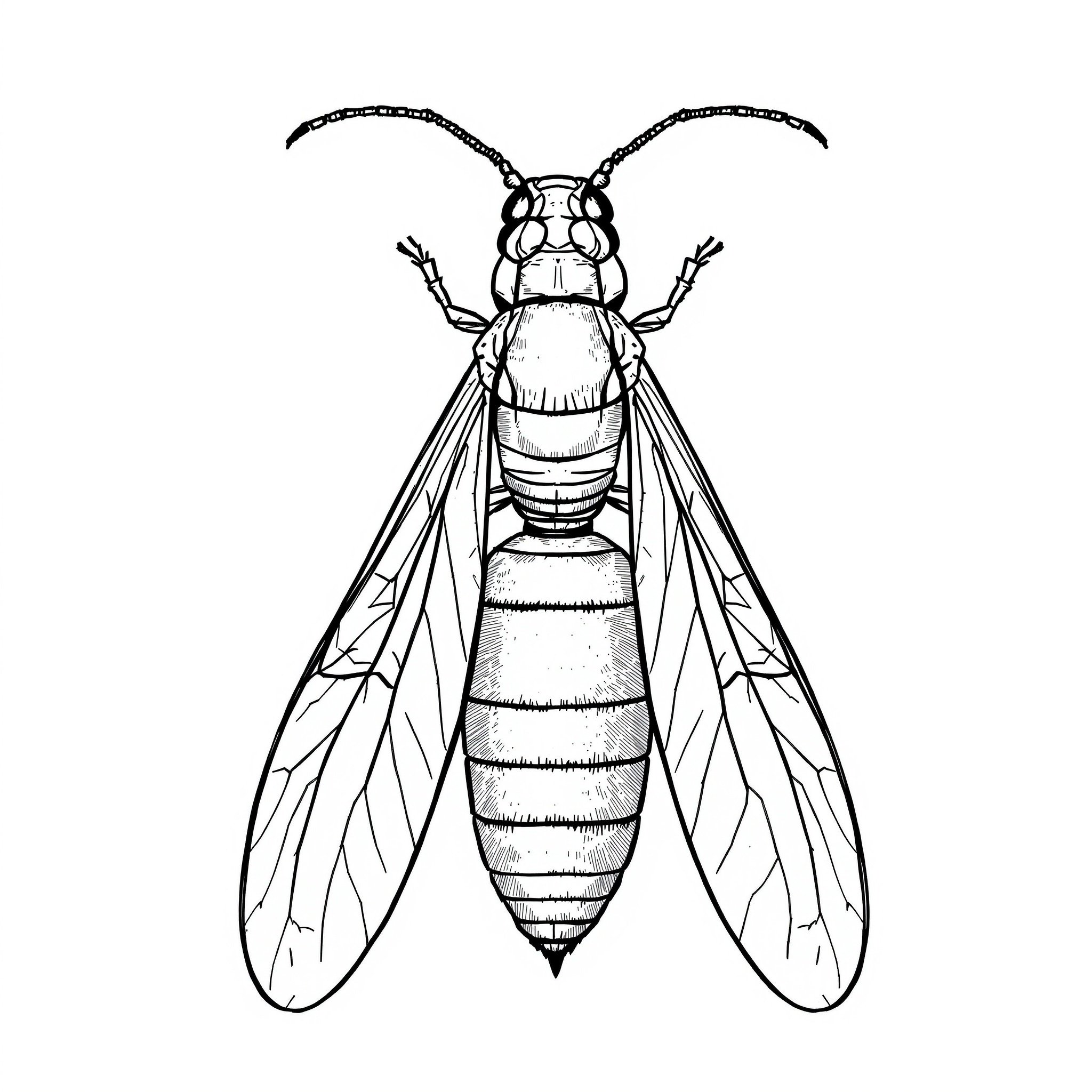
Scientific illustration for identification purposes
Overview
Drywood termites live entirely within wood and do not require soil contact like subterranean termites. They infest dry, sound wood including structural timbers, furniture, and hardwood floors. Colonies are smaller but can cause significant localized damage.
How to Identify
- Cream to light brown soldiers and workers
- Soldiers have large rectangular heads
- Swarmers are dark brown with smoky wings
- Six-sided fecal pellets (distinctive)
- No mud tubes - live entirely in wood
Behavior
Drywood termites establish colonies within wood and do not need soil contact. Colonies grow slowly but can persist for years. They expel fecal pellets from "kick-out" holes.
Habitat
Infest dry, sound wood in structures including attic framing, window frames, door frames, furniture, and hardwood floors. Can infest furniture and spread to new locations.
Diet
Feed on cellulose in dry wood, consuming structural timbers and wooden articles.
Reproduction
Swarmers emerge in swarms, usually in late summer or fall. Colonies grow slowly, typically containing fewer than 1,000 individuals.
Distribution in the Southern U.S.
Common along the Gulf Coast, including Southeast Texas, Louisiana, Mississippi, and coastal regions.
Regional Notes
Drywood termites are primarily a coastal pest in the South. They can be transported in infested furniture to inland areas.
Signs of Infestation
- Piles of six-sided fecal pellets
- Small "kick-out" holes in wood
- Swarmers emerging from wood
- Hollow-sounding wood
- Damaged or weak wooden structures
Prevention Tips
- Inspect used furniture before bringing indoors
- Seal cracks in wood and around windows
- Apply protective finishes to exposed wood
- Screen attic and crawl space vents
- Annual professional inspections recommended
When to Contact a Professional
Contact a professional immediately for any signs of drywood termites. Treatment typically requires fumigation, heat treatment, or localized treatments. DIY treatment is not effective.
Romex Pest Control provides professional drywood termite control services across Texas, Oklahoma, Louisiana, and Mississippi.
Learn about our drywood termite control servicesFrequently Asked Questions
How do drywood termites differ from subterranean?
Drywood termites live entirely in wood without soil contact and leave distinctive six-sided fecal pellets. Subterranean termites need soil contact, build mud tubes, and have larger colonies.
Can drywood termites be in furniture?
Yes, drywood termites commonly infest furniture and can be transported to new locations this way. Always inspect used furniture for termite signs before bringing it indoors.
Latest Research & News
Recent developments about drywood termite
Get the latest news and research about drywood termite
Click "Load News" to fetch recent articles from scientific sources