
Cat Flea
Ctenocephalides felis
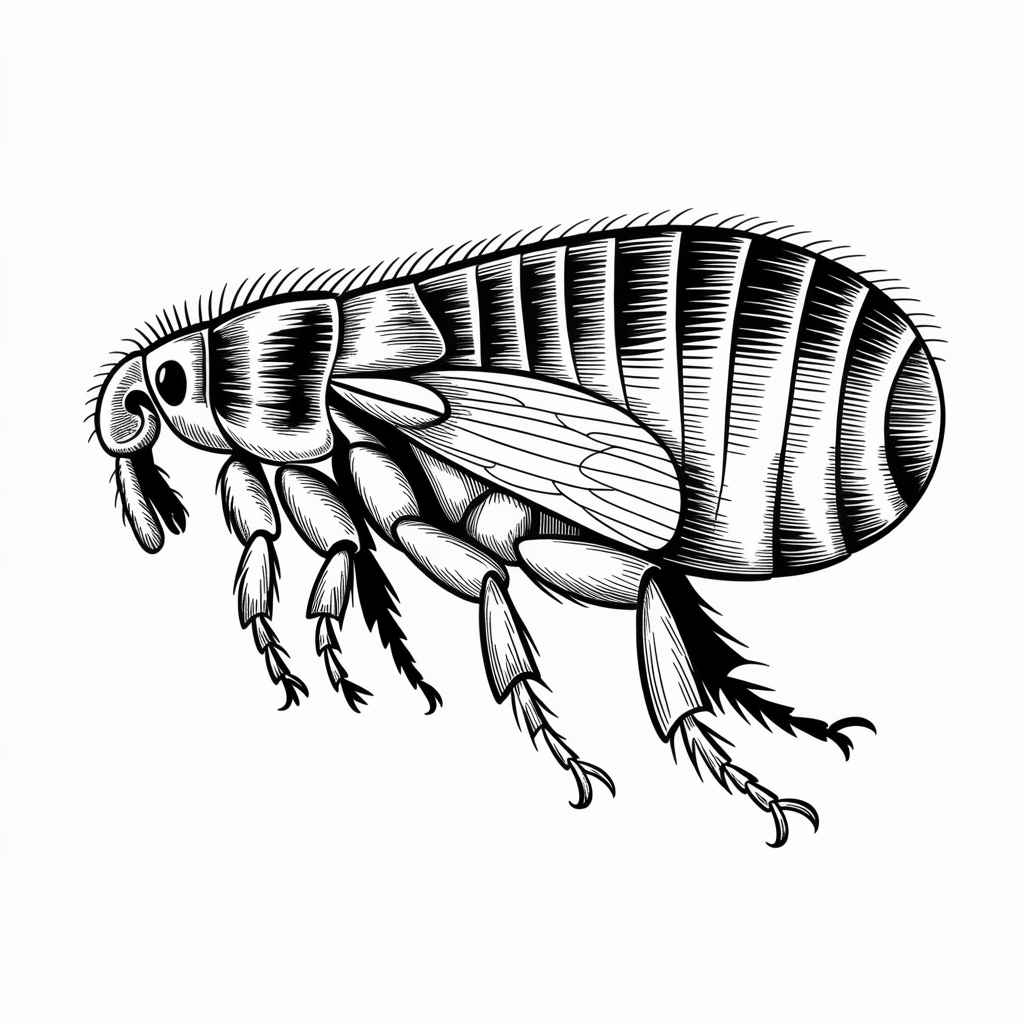
Scientific illustration for identification purposes
Overview
Cat fleas are the most common flea species affecting dogs, cats, and humans. They are wingless jumping parasites that can jump up to 150 times their body length. Fleas can transmit diseases and parasites including murine typhus and tapeworms.
How to Identify
- Very small - 1/16 to 1/8 inch
- Laterally compressed (flat side-to-side)
- Reddish-brown to black color
- Powerful hind legs for jumping
- Backward-pointing bristles on body
- Wingless
Behavior
Adult fleas spend most of their time on hosts, feeding on blood. They can jump up to 8 inches vertically. Most of the flea population (eggs, larvae, pupae) lives in the environment, not on pets.
Habitat
Adults live on hosts (pets, wildlife). Eggs fall into carpet, bedding, and soil. Larvae develop in protected areas with organic debris. Can persist in homes for months without a host.
Diet
Adults feed exclusively on blood. Larvae feed on organic debris and adult flea feces ("flea dirt").
Reproduction
A single female can lay 40-50 eggs per day. Complete lifecycle takes 2 weeks to 8 months depending on conditions. Pupae can remain dormant for months.
Distribution in the Southern U.S.
Extremely common throughout Texas, Oklahoma, Louisiana, and Mississippi. Year-round pest in warm areas.
Regional Notes
The warm, humid Southern climate allows flea populations to thrive year-round outdoors. Infestations peak in summer but can occur any time.
Signs of Infestation
- Pets scratching excessively
- Small red bites on ankles and lower legs
- Flea dirt (black specks) in pet fur or bedding
- Fleas jumping near carpet or furniture
- White flea eggs in pet bedding
Prevention Tips
- Use veterinarian-recommended flea prevention on pets
- Vacuum frequently, especially pet areas
- Wash pet bedding weekly in hot water
- Treat yard areas where pets rest
- Address wildlife that may bring fleas to property
- Keep grass trimmed short
When to Contact a Professional
Contact a professional for severe infestations, infestations without pets (wildlife source), or if over-the-counter treatments are ineffective after 2-3 weeks.
Romex Pest Control provides professional cat flea control services across Texas, Oklahoma, Louisiana, and Mississippi.
Learn about our cat flea control servicesFrequently Asked Questions
Can I get fleas without pets?
Yes, fleas can infest homes without pets. Wildlife like raccoons, opossums, and feral cats can bring fleas to your property. Previous tenants with pets may have left behind dormant flea pupae.
Why do flea problems persist after treatment?
Flea pupae are protected inside cocoons and can remain dormant for months. Multiple treatments over 2-3 months are often needed to kill adults as they emerge. 95% of fleas are in the environment, not on pets.
Latest Research & News
Recent developments about cat flea
Get the latest news and research about cat flea
Click "Load News" to fetch recent articles from scientific sources